
Published on:
•
Last Updated:
A couple of weeks ago, on July 22nd-23rd, we attended BookUp 2026, Australia’s only annual publishing industry conference organised by the Australian Publishers Association. The conference was filled with many inspiring keynote speakers, panel discussions and thought-provoking conversations between leaders and professionals in publishing across the country.
“Now in its sixth year, BookUp brings the industry together to explore innovation, navigate change, and unlock new opportunities across the publishing landscape.” - APA (Australian Publishers Association)
Although FolioFox is a book printing company, not a publishing house, we’re proud to work with many independent publishers and feel very much at the heart of the publishing industry given that we produce books. It only made sense for us to not only connect with the industry at this conference but also to share some key takeaways from our time there for authors and publishers who couldn’t make it themselves (in-person or online).
Running from 9am to 5pm, the two-day event was jam-packed with information and discussions, so we’ve tried to summarise our top insights from the main conference day, excluding the education stream. Although the research day that followed (where Australia’s top publishing industry researchers shared their latest findings and projects) was also very interesting, we’ve tried to keep this article as succinct as possible.
Let’s dive into the top takeaways from this year’s publishing industry conference.
In book publishing, we can’t afford not to have standards.
The conference started off with a bang with a keynote from the co-founders of the online publication and podcast, Lamestream, Osman Faruqi and Scott Mitchell. The duo introduced the idea of what ‘standards’ means within the publishing industry by first explaining why they founded Lamestream to begin with. The venture came about when they began noticing the declining quality and truthfulness of modern journalism as a result of technological change driving media consumption. Creation, access, consumption and discovery are all components now influenced by new technologies, social media platforms and AI, which not only impacts journalism, but also the book industry in Australia.
Through their extensive background working in media (7News, The ABC, The Age and Sydney Morning Herald to name a few), Faruqi and Mitchell noted that book publishing has always been at the core of journalism, as the smartest journalists are the ones that value and reference knowledge published in books. That being said, although journalism has an important role in sharing news, stories and holding power to account, readers can only learn so much from daily engagement with an easily accessible online article. In comparison, books have an even greater political influence and most importantly, embody the finality and completeness of a story being shared with the world that explains why it can take years for a book to be published.

From this perspective, Mitchell explained how publishers can essentially be considered gatekeepers of standards as they decide who gets a voice, especially in a medium like a printed book that can’t easily be banned or suddenly disappear like a deleted online article can.
However, as the investment of time has become the biggest friction for media discoverability and consumerism, speed is at a premium and showing outstanding value to grab attention across competing platforms is becoming essential for discoverability. Despite the fact that this has inevitably applied pressure to publishing companies, who now need to balance sharing stories with maintaining profitability as businesses, the pair strongly asserted to all publishing professionals in the audience that the strength of publishing lies in not being reactive.
“Books are our best hope in resisting the temptation of the algorithm.”
- Osman Faruqi, Lamestream Co-Founder.
Even if a book about a specific event has been published after the fact, i.e. Conspiracy Nation by Cam Wilson & Ariel Bogle, the theories, perspectives and content from it are still relevant. If the industry can strive to make sure the authors, agents and publishers are all on the same page during the process of publishing, that lengthy time it takes to complete and publish a book as a broader body of high quality work is worthwhile. The ability to create timeless resources that are used by journalists and read for years is one of publishing’s strengths—compared to social media trends that now last maybe 3-4 days in the cultural zeitgeist and are promptly forgotten afterwards.
This is why the standards and quality of book publishing has to be maintained.
Building trust with readers starts with strong, collaborative author partnerships throughout the publishing process.
There were a lot of great insights and experiences shared from a diverse group of professionals in panels and lightning talks throughout the day (which has made keeping this article short very difficult) and the impact of AI was a consistent theme. Trust naturally became a major topic of discussion amid recent controversies surrounding AI use in book publishing. A key takeaway was that building and maintaining trust starts with publishing professionals prioritising the quality and depth of their engagement with authors.
A strong partnership with an author not only ensures that the publisher can trust the author won’t be using AI in their work, but also that authors can trust that their work will be accurately represented and protected upon release.
Nick Tapper (Associate Publisher at Giramondo Publishing) noted that maintaining trust with the author also comes in the form of respecting where the story is coming from and working with them to develop their books into their best form—not into something different. Cindy Manfong (Publishing Projects Editor at Indigenous Literacy Foundation) explained how especially important this is when publishing First Nations stories that require direct collaboration with the local community. A lot of other media is dependent on books for stories, so carefully and thoroughly creating books in partnership with authors and communities is essential.
Other strategies mentioned to maintain trust include:
- Employ rigorous editorial policies to publish works with integrity, especially non-fiction and scientific books that require robust references.
- Using good judgement (and good taste) to stay true to what their audience expects, especially when it comes to the quality and genre of books published.
- Trust from readers and authors can also be created and maintained by certifying human-created content with organisations like Dr Alan Finkel’s Proudly Human.
We can benefit from AI (minus the slop) with robust procedures that prioritise human creativity.
It was astounding to hear Justin Wolfers (Publisher at Murdoch Books) share that AI usage alone is likely to consume as much as water as 1.3 billion people by 2030, and yet only 57-64% of Australians believe that the risks of AI outweigh its benefits. Despite that, AI doesn’t seem to be going away anytime soon so we should at least ensure that we’re only using it to drive efficiency, without impacting tasks that require human intelligence and creativity.
When it comes to design in the publishing industry, the biggest risk posed by AI usage is copyright infringement. To maintain intellectual property, Mark Campbell (Creative Director & Publisher at HarperCollins) recommended using software such as Adobe Firefly, Canva Magic Studio and Getty Images, for design admin such as re-working creatives in different colours, adjusting existing artwork with control and setting boundaries. This then allows human intelligence (or Hi) to work with creativity, respond emotionally to a book and push boundaries when designing a book cover.
“Human intelligence is what helps us push boundaries, whereas AI is what we can use to set them.” - Mark Campbell, Creative Director & Publisher at HarperCollins
Turn AI Into A Technical Coach To Build Tools That Save You Time
Jessica Paul (Head of Operations at Allen & Unwin) took us through her entire process of using Claude to build a tool that automated bulk email and calendar changes for critical paths across multiple departments at Allen & Unwin. The key to success in getting AI to write great tools with code scripts lies in perfecting the prompt you provide it. Jessica’s tips for writing a great AI brief consisted was explained with the following acronym:
- B | Background: Describe the real problem, and how big it is. E.g. “39+ critical path dates entered by hand across multiple departments.”
- R | Real materials: Attach the actual file, and tell it to read it. E.g. “I’ve attached the schedule, read it to understand the structure.” Note that you should ensure that you’re not sharing confidential information, and it’s recommended that you’re using a company version of AI or at least ensure your settings don’t allow this information to be used for AI training.
- I | Intent: Say what you actually want out of it. E.g. “Come up with three ways I could automate this.”
- E | Encourage questions: Tell it to ask before it answers. E.g. “Ask me any questions before suggesting a solution.”
- F | Follow up: Answer what it asks, so it gets it right. E.g. “Outlook - reminder only, proof of concept first.”
Great briefs produce tools that automate boring tasks and stay away from the craft of book publishing. Examples of other tools that could be built to run themselves or used for reshaping data from one format to another include AI-coded scripts for pulling numbers out of a database, merging messy data from different systems and turning PDFs into clean spreadsheets.
Kevin O'Brien (Managing Editor at Simon & Schuster) reminded everyone that AI is known to pull facts and figures out of thin air, so building scripts for finding references, rewriting and editing work should be avoided, especially as it often involves feeding a manuscript to the AI engine (which requires the author’s consent!).
Deeper metadata is crucial to improving a book’s discoverability.
One of the many tasks involved in publishing a book is organising its metadata. It’s how systems, TitlePage, search engines and retailers categorise and ‘tag’ books so to speak. In his afternoon keynote address, Nigel Lopez-McBean (CEO of Narrative Muse) explained why readers often struggle to discover the right books online and that’s largely shaped by the fact that online search behaviour has changed since the introduction of AI technology.
Whilst often the main topic of discussion when it concerns publishing, Generative AI is more visible and regulated as it actively ‘creates’ content. However, Discovery AI is a technology publishers have no visibility or control over, and it’s the technology that ‘decides’ what books are recommended to readers online. This can be exemplified by the introduction of Google’s AI overview, a feature that increased zero-click searches (when the user doesn’t click on any of the links on the page after doing a Google search) from 54% to 72% and where only 1% of users click the linked citations from the AI overview to view the source of information.
“Discovery is one of the most culturally significant things a technology can do.” - Nigel Lopez-McBean, CEO of Narrative Muse.
The discoverability of a book online is pretty crucial and unfortunately, the latest research on reading in Australia indicates that there is a wide gap between what readers want to read and what they likely get recommended online.
Search engines and Discovery AI work by making assumptions using metadata and existing engagement signals (like article mentions, social media posts, book reviews, tweets, etc.) to predict what a reader is looking for. This is problematic, given changing search behaviour, as it means that an engine will often decide which books matter and are worth recommending, regardless of its quality or cultural value. This also puts new books at a significant disadvantage as new releases don’t have any engagement signals to begin with.
However, metadata can be the key to what gets a book recommended on an AI summary and also affects how easy it is for a reader to find it on retailer websites. Natasha Ritz (General Manager of Digital Transformations at QBD) shared that in QBD’s bid to improve discoverability, they first started by looking at how readers search for books and asked for personalised recommendations in-store to rethink the content structure of book metadata in their online systems. If a book’s metadata is thin with only generic categories like ‘general fiction’, ‘young adult’, ‘mystery’, it’s no wonder that engines may rely more on engagement signals in their recommendations when there’s little data to support a book’s relevancy to a search query.
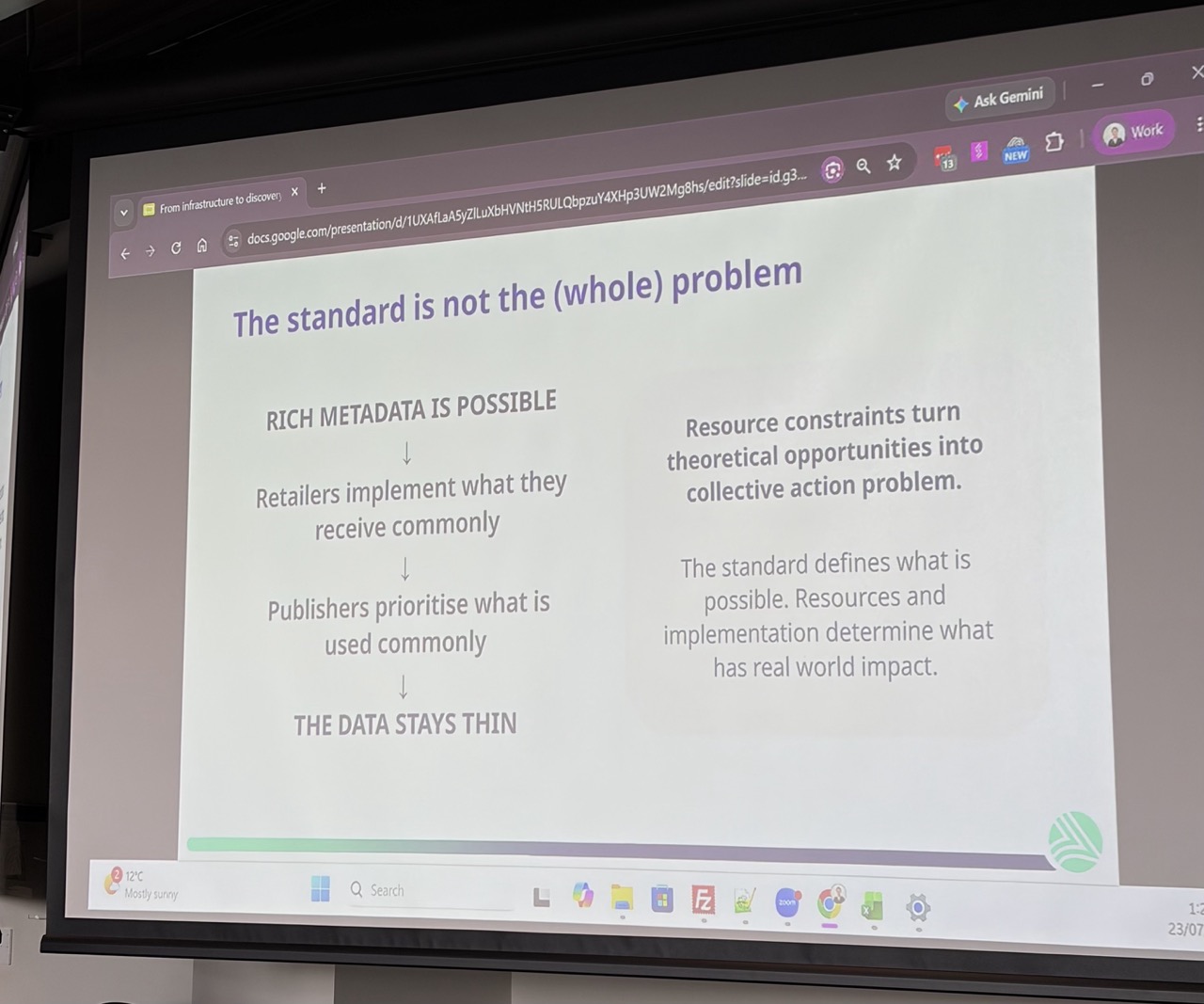
Cat Colwell (Head of Supply Chain at APA) mentioned that TitlePage metadata for Children’s Books included over 417,000 unique keywords, and new improvements to TitlePage coming soon will make adding more keywords, descriptions and tags for deeper metadata easier.
“We need to think like a reader because discovery is from their perspective. How does this book make someone feel when they’re reading it? How do they feel after they’re reading it?” - Natasha Ritz, General Manager of Digital Transformations at QBD
“When writing metadata, I think it’s about spending more time on adding keywords like place names, themes, topics. You need to put yourself in readers’ shoes and think about how many specific readers you can reach.” - Arlie Alizzi, Editor at Magabala Books.
Of course, it would help if there was a standard structure for book metadata as it currently varies by platforms and retailers, which is what often makes metadata complex and/or time-consuming for publishers. However, the key takeaway really was that improving discoverability isn’t about setting a standard for writing metadata or more metadata, but that it comes down to providing clearer, deeper metadata—no matter what system is using it.
In order to reach readers effectively, we need to dig deeper and understand their specific wants and needs first.
Across the entire publishing process, the consensus across multiple panels and presentations was that publishers need to keep readers at the forefront of their decision making, especially if we want to increase reading rates across Australia. The Understanding Australian Readers research from Australia Reads identified that more than half the country—that’s 13 million people—want to read, but many struggle to read regularly from a lack of capability, accessibility and confidence.
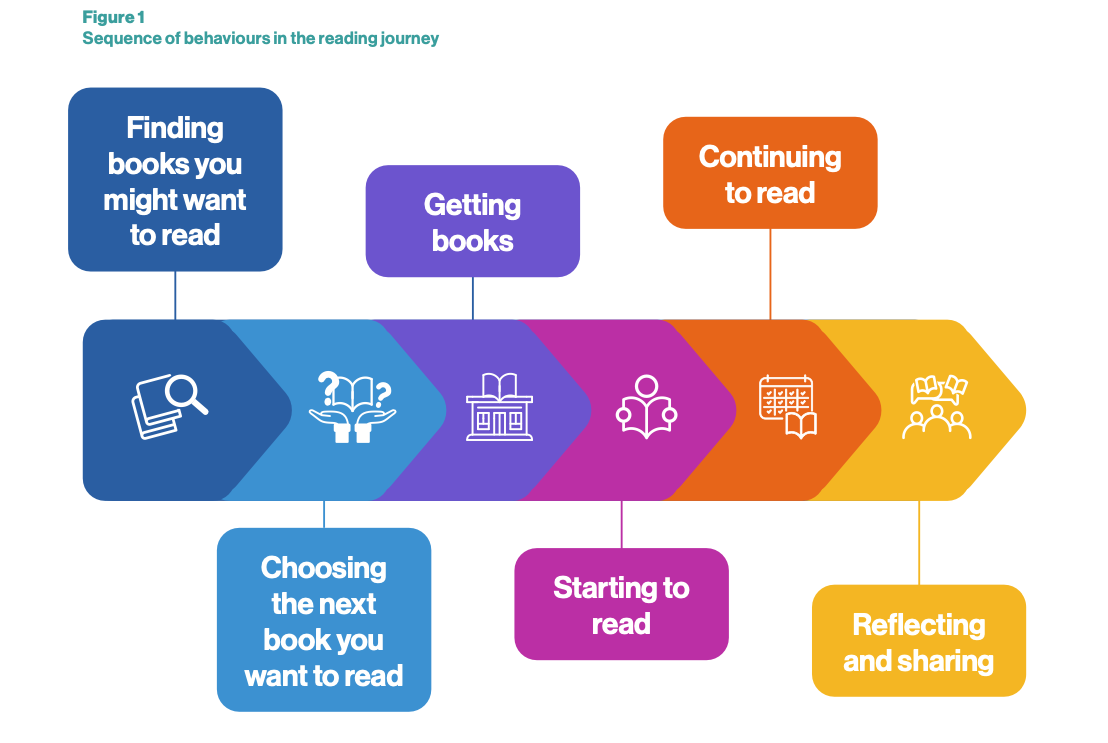
Most of the discussions reflected recent findings from the recent Reaching Australian Readers report; focussing on the need to understand readers at a deeper level, in order to motivate them with specific, targeted strategies so that reading is attractive, accessible, relevant and easy.
BookTok was used as a prime example of readers connecting online to form a community, without initial influences from publishers or authors, based on the experiences books gave them. Would this have been such a huge phenomenon prior to TikTok’s virality if publishers had caught on to what readers were looking for before?
“Romance and fantasy were genres that were underpublished, underserviced, and it turned out to be a huge audience that publishing completely missed. We need to keep listening to what readers want instead of pushing things on them. It’s about putting readers at the centre…We need to bring back the fun in reading, and not look down our noses based on ‘what kind of book’ someone is reading.”
- Alysha Farry, Marketing & Publicity Director at Hachette Australia.
Even during a panel on trends in publishing, the topic of putting the reader first was prominent, as Anthea Bariamis (Publisher at Simon & Schuster) explained that it’s often great books that create trends, because readers support them. This is why publishers should look for manuscripts that are unique, authentic and will resonate with what readers are looking for in a book, for a better chance to succeed.
“It’s about getting people to see that you’re not losing time—you’re actually gaining time by reading.” - Anna Burkey, CEO of Australia Reads.
We hope you found these insights helpful, whether you're an author, publisher or reader with an interest on the current state of the publishing industry in Australia.
For more information, resources and to learn about future events for professionals in the Australian book publishing industry, visit the APA’s website, and for the latest information on Australians' reading habits, check out Australia Reads.
If you’re an author or publisher looking to bring your books to life, you can learn more about our local book printing services in Melbourne or get in touch with our team to get started on your printing journey today. We're here to help you navigate the evolving world of book printing with confidence.