

Published on:
•
Last Updated:
As the end of the year quickly approaches and the new year rears its head just around the corner, it’s about time to get started on thinking about your 2027 calendar needs. Whether you’ve got your eyes on printing a wall calendar to hang up in your office or are interested in printing a desk calendar to keep you company while you work, just follow these simple steps for setting up your calendar file to get the best printing results.
Why Print A Wall Calendar?
Wall calendars are the suggested calendar format for keeping track of the date in shared spaces. The best thing about a wall calendar is that it is always visible - perfect for a quick glance from across the room or checking your schedule as you move through a communal area. The idea of a wall calendar is that it’s a useful tool that doubles as an aesthetic object, usually displayed in shared spaces where multiple people can utilise it to get a grasp on a big-picture schedule without much required active engagement.
A wall calendar is perfect for family spaces, like kitchens, home offices and living rooms, as well as communal work spaces, like kitchenettes, staff rooms, site offices, reception areas, workshops, break-out rooms and meeting rooms. This creates a shared document of dates and events anyone on your team can add to and take from.
Another terrific use of a wall calendar is offering it to clients, business partners and customers as a marketing tool. Branded wall calendars mean that the visibility of your business doesn’t just infiltrate your daily routine, but the routine of your client base. Plus, you can experiment with the design of your wall calendar to make it not just a productive addition to your or your client’s workspaces, but also a beautiful product.
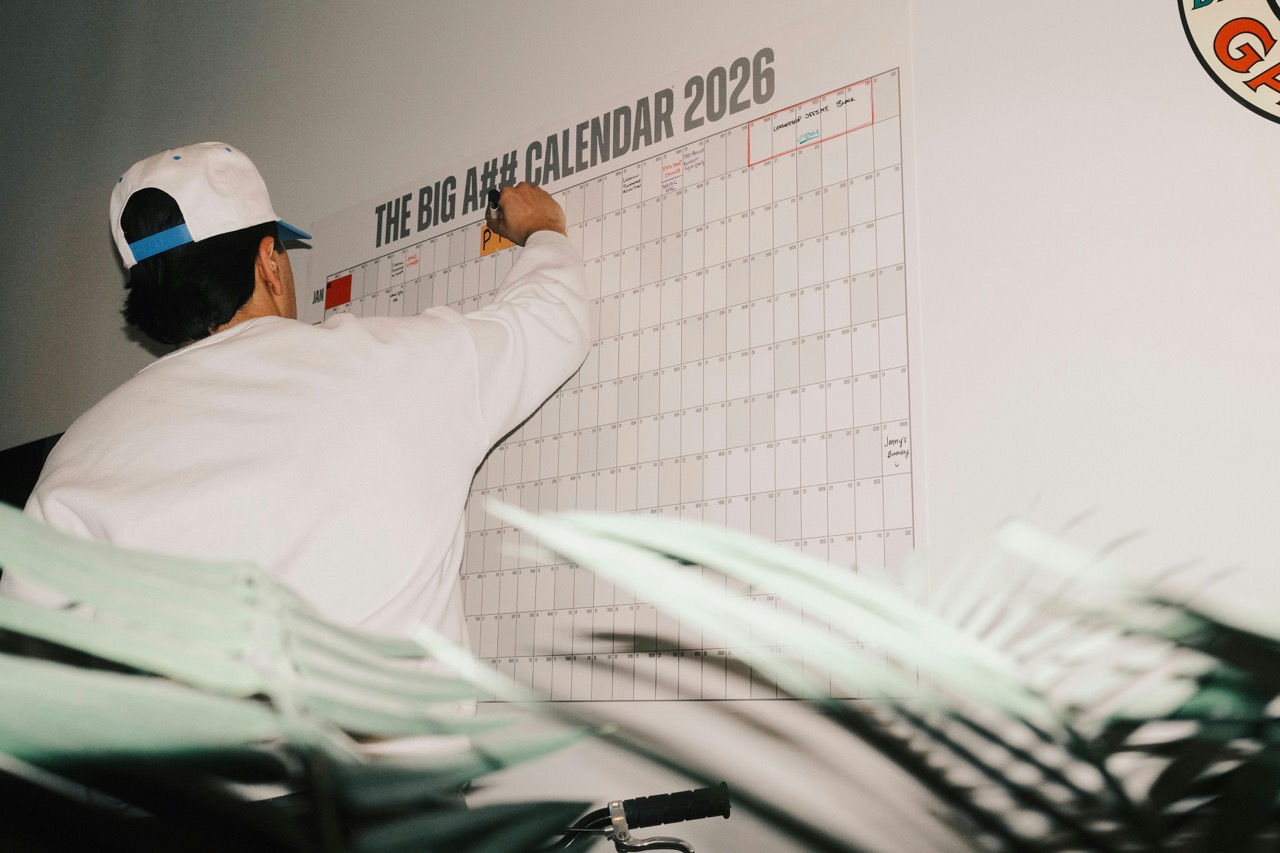
How To Set Up A Wall Calendar For Printing
Communal work spaces pair perfectly with wall calendars that are clear, bold, organised and neat. For a wall calendar that is easy to flip through as the months go on, as well as sturdy enough to hang from a wall and be written on or handled without any breakage or disruption, you’ll be looking at designing a calendar that displays a monthly layout of dates in square boxes with the month written clearly.
The more white space the better, so that employees can write important dates and upcoming deadlines in the boxes for others to see. There’s certainly an opportunity to add some flair to a corporate wall calendar - whether it be your brand’s colours or your business’ logo, especially if the calendar is being used as a corporate gift or for customer marketing purposes. The best binding option for a workspace wall calendar is wire-o binding - a sleek, professional binding that uses a metal wire formed into a loop pattern that is inserted through rectangular holes along the spine. If you’re creating a calendar for more casual use and you want to keep it affordable, spiral (or coil) binding is a great alternative.
For workplace wall calendars, it’s best to keep the orientation of the document portrait, allowing for a large, clean display of gridded boxes in rows of seven - a column for each day of the week - so that users can write important information into the corresponding dates. Your binding will run along the top edge of your calendar, so make sure no imagery or type will be cut off or be lost along the top. It’s a good idea to also add a lined space at the bottom of the grid or beside it for any additional notes for the team using it need to keep track of. Feel free to design a landscape version, too, if that would suit your calendar use better.
To turn your functional product into a beautiful one, consider adding some artwork or imagery to the monthly display, above the gridded squares. For a workplace, this could be photos of your team or business. For personal use, you could add photos of family, friends, animals, or personalised illustrations.
We recommend printing a wall calendar in A4 or A3 if you’re creating one for a high-traffic area. The bigger the calendar, the easier it is for people to quickly glance at it and take in the information they need. Colour works beautifully in wall calendars - both on the cover and in the internal pages - so that if any logos or brand names are present, they can catch the attention of the viewer. Print your wall calendar in a paper weight of 200 to 300 gsm for the cover, and 100 to 150 gsm for the internal pages, using a silk or uncoated paper finish.
Why Print A Desk Calendar?
On the other hand, a desk calendar is a nifty tool for organisation and keeping track of dates that is best suited to a single user. Whereas a wall calendar is typically displayed in high-visibility and shared spaces, a desk calendar is more for personal use - displayed on a desk, of course!
While a wall calendar will give an overview of important dates, the personal use of a desk calendar means that it’s often more suited to a focus on daily tasks, having a schedule reachable within arm’s length and as a place to keep notes close while working. This helpful productivity tool is at its best when it's serving its user as a reminder of their personalised schedule with just a quick glance up from their work while sitting at their desk.
Just like a wall calendar, a desk calendar is a great marketing tool and corporate gift. Creating a printed product that is used on the daily serves as an easy reminder for your client or customer of the sustained visibility of your brand - all you need to do is add your logo and branded colour scheme to the design.

How To Set Up A Desk Calendar For Print
As your desk calendar will be living on a desk, there are a few differences in how to set it up for printing when compared to a wall calendar. The first major difference will be the size of your calendar. Desk calendars work best when they’re compact and easier to move around, meaning A4 or A5 (or smaller) are popular print sizes for desk calendars. Otherwise you can opt for a desk calendar set up as a large desk pad. With either option, you’ll want to set up the orientation in landscape, so to capitalise on the most amount of space for the month that is displayed.
Create a grid that displays the dates in columns with the days of the week running along the top, just as you would a wall calendar. Because of its individualised use, keeping enough space for lines to write notes on is a great way for your user to get the most out of this product. If you’re creating a corporate gift, make sure to pop your logo somewhere visible for your client to see on each of the pages.
Like a wall calendar, quality and colour matters - especially if you’re designing a calendar as a corporate gift or marketing tool - so a paper weight of 200 to 300 gsm works for the cover, and 100 to 150 gsm for the internal pages, using a silk or uncoated paper finish. Wire-o binding is a great option if you’re printing a calendar as a business gift, presenting your product with a modern edge and sleek appearance. For more casual uses, a desk calendar is also suited to spiral binding - a more affordable binding alternative that uses a continuous plastic coil threaded through holes punched along the spine edge, allowing for a complete rotation of the pages as the months are flicked through.
One of the most important things about creating a portable desk calendar is making sure it has the ability to stand upright by itself. Talk to us about your options of creating a standing desk calendar, and we can run you through how to make this printed product reach its full potential. Otherwise, if you're keen for a desk pad calendar, then the binding is simply a layer of glue that makes it easy for you to remove the top page once the day, week or month is over.
Whether you’re printing a calendar as a gift to clients or you’re designing one for employees’ workspaces, both desk and wall calendars are incredible tools that provide gentle reminders of your brand while doubling as functional products to keep you - and your customers - on track daily.
To learn more about our printing services for calendars and get started on your printing journey, get in touch with our team today. We're here to help you navigate the evolving world of printing with confidence.