
Published on:
•
Last Updated:
When it comes to building your printed project, you’ll find that a different assortment of paper types are utilised for different printed materials depending on their weight, thickness and size. Below, we explore the differences in weight of these contrasting types of paper, how they can be used when printing your own book, as well as explain the meaning behind key words in the printing process.
The Key Terms To Know
While some of the jargon and keywords used across the printing industry are self-explanatory, others are a little harder to decode if you haven’t come across them before. Let’s take a look at the key terms we’ll be referring to as we discuss paper weight in the printing process.
GSM (grams per square metre)
Grams per square metre (GSM) simply refers to the weight of the paper stock, meaning the weight in grams of a single square metre of paper. More often than not, the higher the GSM is, the thicker the paper will be, however the thickness of the paper itself will vary across paper types and finishes. GSM technically only indicates the weight, measured by literally weighing the paper.
Note that when printing with FolioFox, the type of paper stock chosen has more impact on printing costs than the weight of that stock.
μm (micron)
Conversely, micrometre or micron (μm) is used to measure the thickness of the paper, otherwise known as the paper’s “caliper”. Meaning one-millionth of a metre, μm is a nifty symbol that allows printers and authors to use a shorthand in portraying how thick a piece of paper measures.
Lb (pounds)
While pounds (lb) is most commonly used as a measurement for paper weight in the United States - only rarely in Australian book printing - it’s a term to be aware of in case you come across it on your book printing journey. Similarly to GSM, pounds represents the weight of the paper - measured in this case by the weight of a ream (typically 500 sheets) in its standard uncut size. When it comes to measuring the weight in pounds, different paper grades (for example, Bond, Cover, Index, Tag or Text) are worked out by the specific ream weight.
Lightweight paper
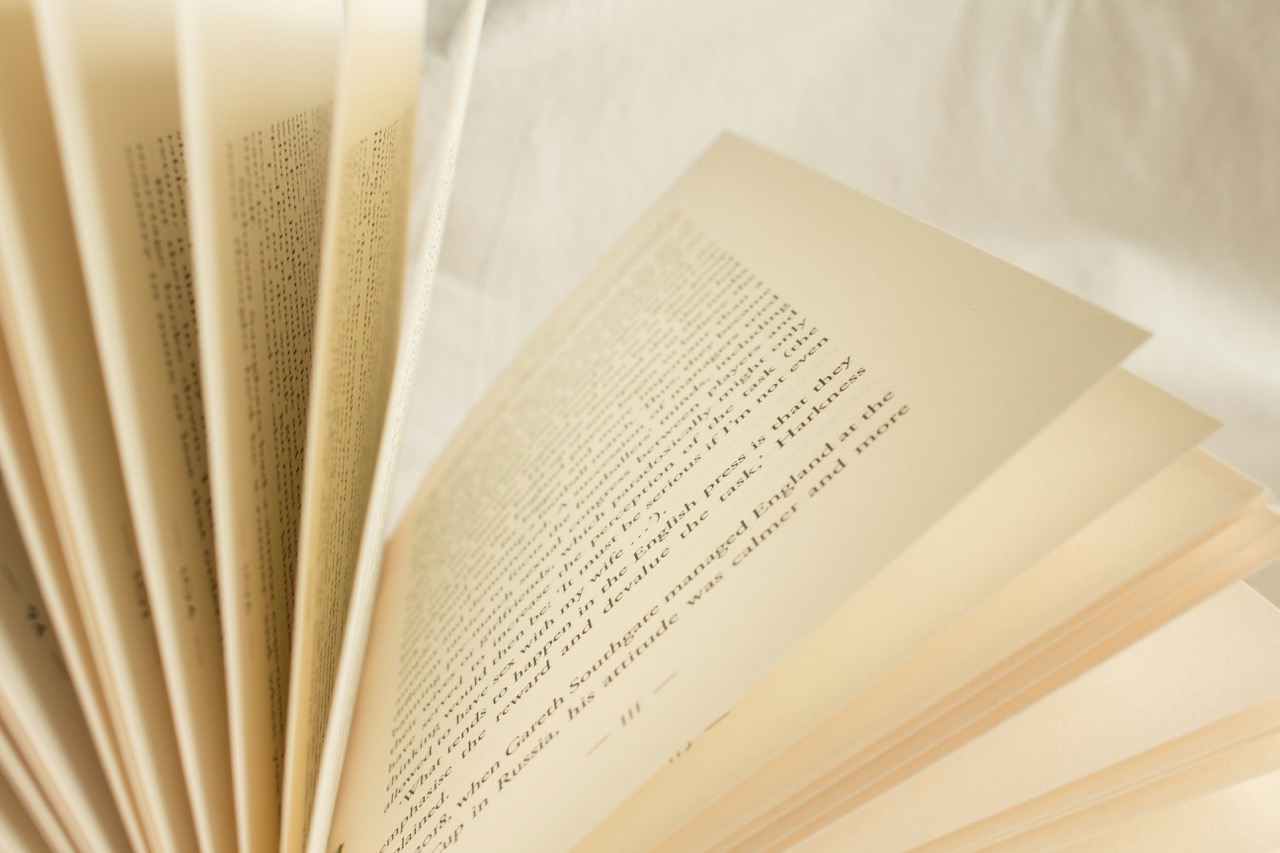
You’ll find that paper weight can be classified as either light or heavy. Within these categories, there are sub-levels of lightness/heaviness that provide more information specificity about the weight. As a rule of thumb, lightweight paper is usually around 35 to 100 gsm and could be compared to thin copy paper, used for printing things like book internal pages, notebooks and everyday printed projects.
Midweight paper
Midweight paper is one of the most common weights you might come across in your day-to-day life. Usually weighing around 100 to 250 gsm, midweight paper is used for professional documents, corporate booklets, brochures and magazines internal pages. It's also the paper stock used for dust jackets, endpapers and any projects that generally require full-colour interior pages, so that it’s not see-through.
Heavyweight paper
Next up, heavyweight paper. Typically between 250 and 350 gsm, heavyweight paper is used for printing covers, like paperback book covers, calendars, children's books and posters. You’ll usually find this kind of paper at commercial printers only - household printers aren’t quite equipped to handle the weight of this paper. This type of paper isn’t suitable for every project, as binding and page count are both things that will affect whether this paper stock weight is too thin or thick.
Extra-heavy paper
Think of this paper weight as the type reserved for card-type, specialty projects like bookmarks and business cards, or for spiral/wiro book covers that require a bit more heft but want to stay economical with a paperback rather than a hardcover. Weighing over 350 gsm, this is the best paper weight for these types of printing projects, as they require a lot more rigidity and durability.
What Is The Ideal Text Paper Weight?
In simple terms, the text paper weight refers to paper that is thin, flexible and lightweight - usually up to 150 gsm. When printing a novel or any other kind of traditional book, you’ll use uncoated text paper weight for the internal pages of your book. Text paper weight can also be used when discussing the paper of projects like newsletters, flyers, letterheads and internal pages of magazines, booklets, calendars, or any project that may require the pages to be folded.
The exact weight of the paper is also highly dependent on the binding method, number of pages in the book or publication and to a small extent, the type of artwork that will be printed. It’s worth remembering that the weight of the paper you choose doesn’t always correlate with the actual thickness (micron/caliper) of the paper stock.
If you’re considering a standard novel, memoir, notebook or workbook for writing or reading, that will be perfect bound, the interior pages are often a paper stock weight of 70gsm to 100gsm.
Whereas a magazine or newsletter that requires full-colour printing and fewer pages than a novel, will often use a heavier interior paper stock of 140gsm - 250gsm, regardless of binding type. Most projects with fewer pages will require a slightly thicker interior page, that’s closer in weight to the cover, and projects with more pages can be printed on lighter stocks (in combination with thicker cover stocks to hold them securely).
Text paper weight is very dependent on the project, but if you were to ask us what’s the best text paper weight for a perfect bound novel? We’d say our 100gsm creamy book paper (granted you’ve got at least 200 pages of words to go in it).
What Is The Ideal Cover Paper Weight?
Cover paper weight is often thicker and heavier than text paper weight and often between 250gsm and 350gsm. At its lightest, cover stocks can be the same medium weight stock as its interior pages (often called ‘self-cover’ and very common for saddle-stitch books). At its heaviest, cover stock weight can be similar to that used to make cereal boxes. Because this is essentially just a heavier weight of the same paper types you can choose from, cover stock also comes in both coated and uncoated, and can be either glossy, silk/satin or matt. This paper weight isn’t just used for book covers of course, but also for things like calendars or even the interior pages of children's books as they require a more sturdy construction for durability.
Many printers, including FolioFox, will generally recommend a 300gsm paper stock weight for a perfect bound book cover, regardless of type or finish, as it’s sturdy enough to hold all your pages. For other binding methods, there is a bit of flexibility as it all depends on the project’s page count and its intended usage, but around 300gsm is what we’d say is the ideal cover paper weight.
To help you figure out what paper stock weight you might need, we’ve got a handy infographic below to illustrate the information discussed above.
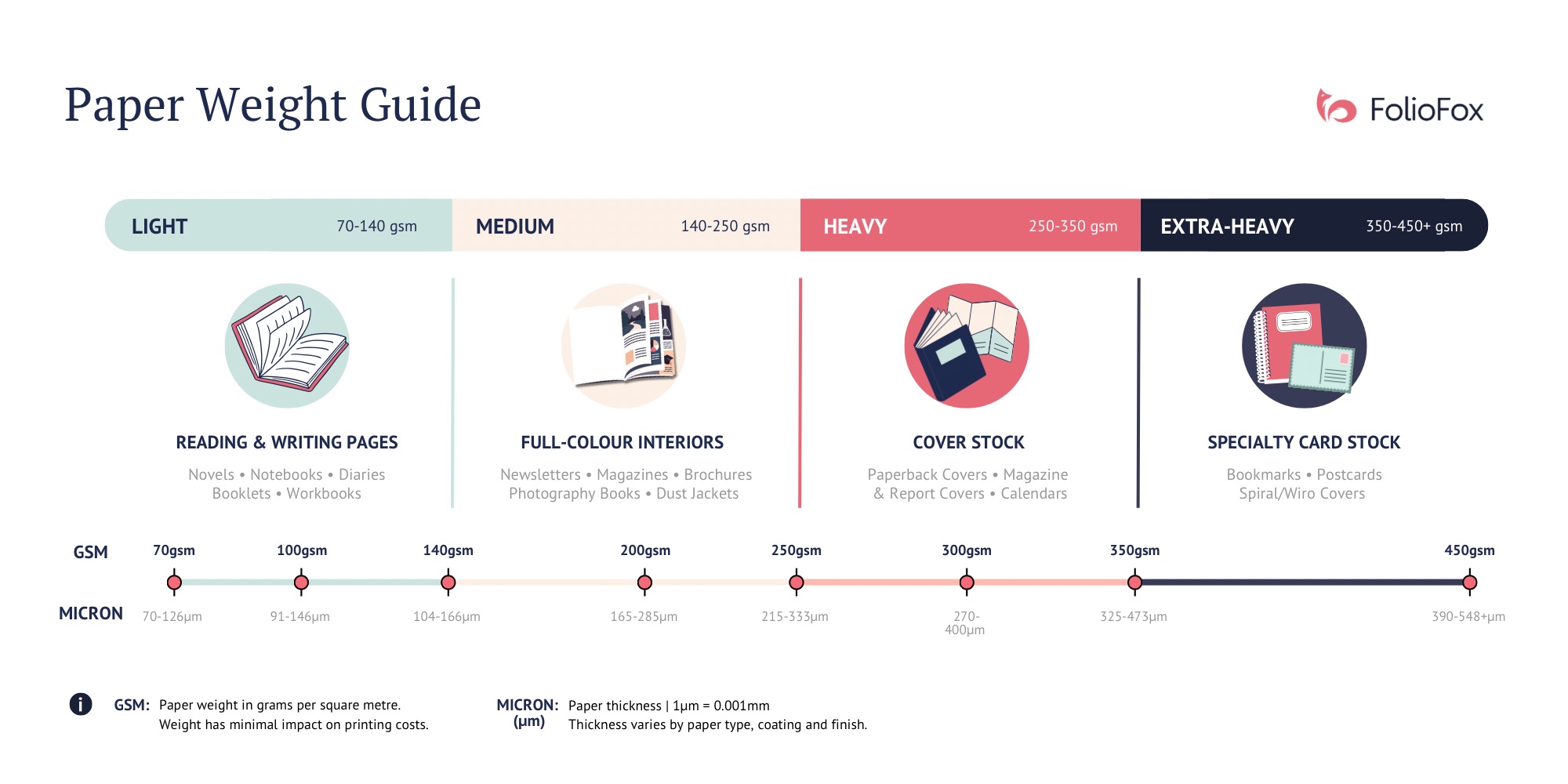
No matter what you’re printing - from self-published paperback books to newsletters for your community club - keep this infographic or article handy so you can understand the intricacies of choosing the right paper during the printing process, especially some of the jargon around paper types and weights.
To learn more about our book printing services and get started on your printing journey, get in touch with our team today. We're here to help you navigate the evolving world of printing with confidence.