Published on:
•
Last Updated:
While graphic novels and comic books may appear similar enough storytelling formats to use the names interchangeably, when we break down these genres of publication, you’ll find that the two types of book differ more than you might think. Whether you’re crafting a comic book or graphic novel of your own or are teaching others about this method of storytelling, read on to discover the differences between these two types of publications and how they vary in their printing processes.
What Is A Comic Book?
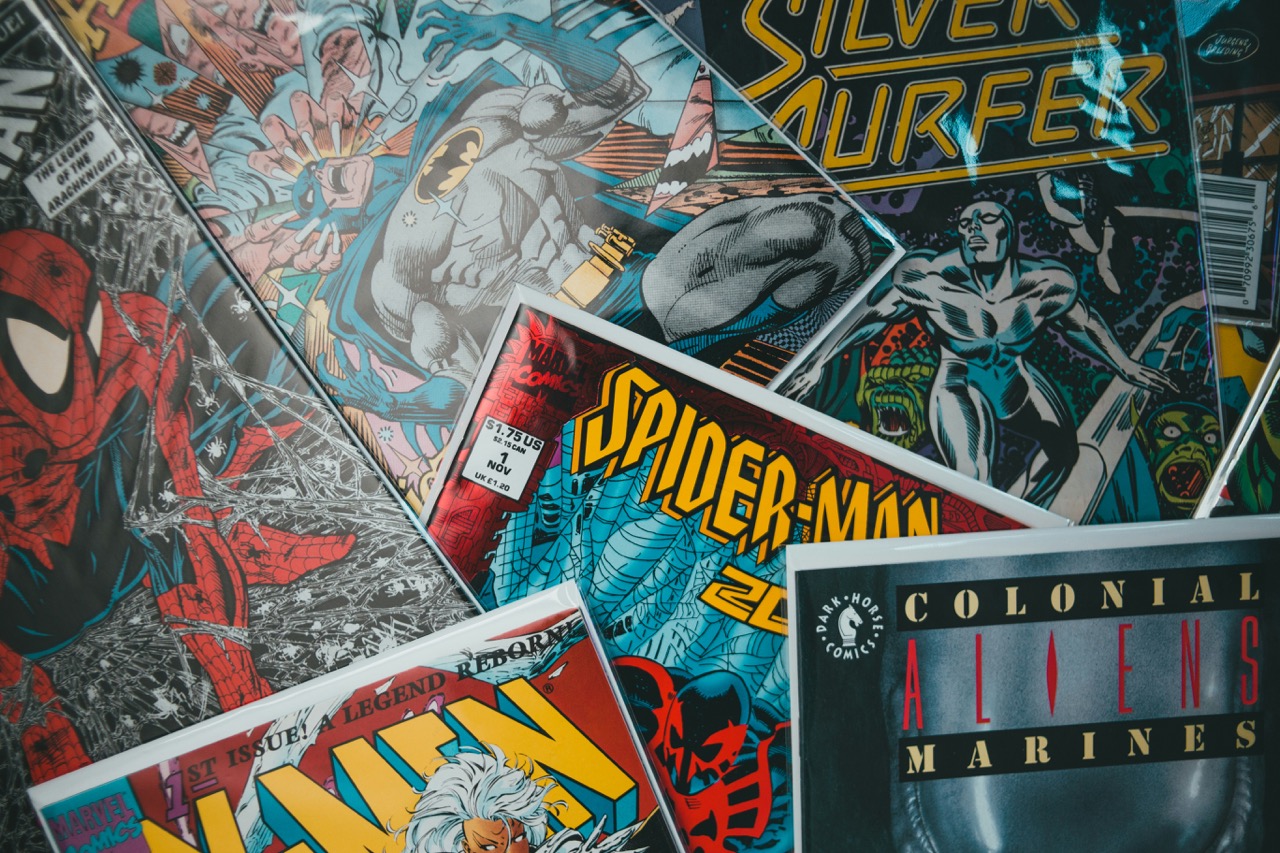
In simple terms, a comic book is traditionally a magazine-like publication that is produced in periodical form - meaning it is released on a regular and recurring basis - and contains illustrations with captions that tell a visual story. The first comic book is thought to have been published in 1897, but it is 1938 - when the Superman comic debuted - that is commonly understood as the peak of the comic book industry. While when you think about comics, you might think of the golden era of superhero stories in a time before the digital age, comic books are far from a niche market in the current publishing world. In fact, thanks to the evolving nature of the medium and new technologies and a greater accessibility for comic book makers to get their foot in the door, the industry is thriving in our modern age.
What Is A Graphic Novel?
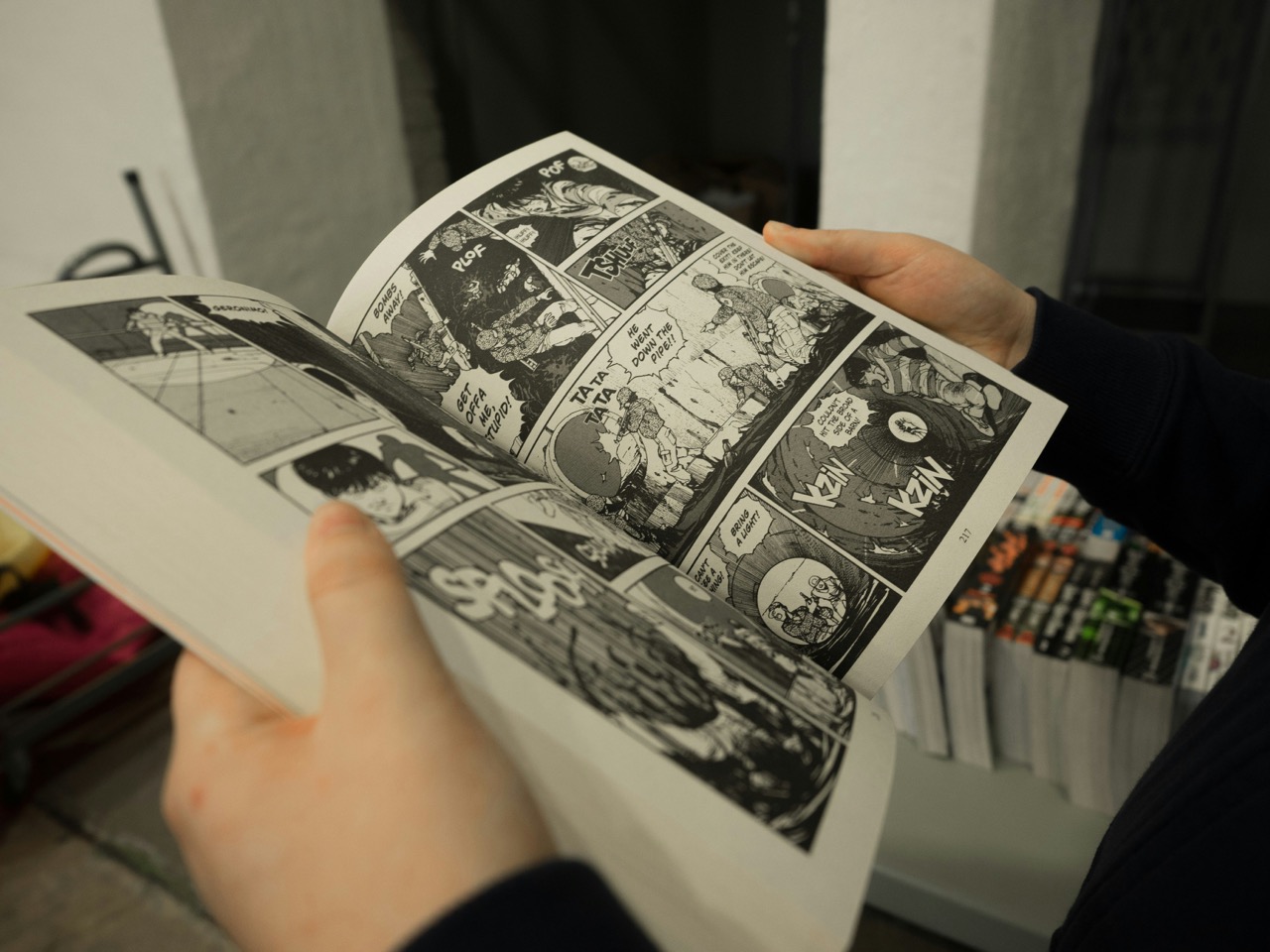
On the other hand, graphic novels are publications that are made up of comic-like storytelling devices - meaning illustrations and imagery with captions - but are told through long-form, book-length narration. While the story at the centre of a comic book may traditionally be told through serial productions released periodically, a graphic novel tells its complete story in the one stand-alone publication, whether or not they are part of a larger series. Graphic novels appear more book-like than comic books too, being printed as either a soft-cover or hard-cover book that looks traditionally more similar to any other book you’d have on your bookshelf.
How Graphic Novels and Comic Books Differ From One Another
The most notable difference between comic books and graphic novels is their varying sizes. This doesn’t only impact the way these differing publications feel in your hands, it also reflects the varied audiences, content, story genres and processes of printing between the two formats.
Because of their magazine-style serialised format, comic books actually have a wide range of readership, from adults seeking out mature themes in these parcels of visual storytelling to children learning to read with these accessible pictorial narratives. On the other hand, one of the biggest proportions of audiences that read graphic novels is teenagers aged 13 to 17 who come to this format for young adult stories told through visual imagery. Because of their reliance on art and illustration and their containment of a longer story within one book, graphic novels are popular with younger readers that place an emphasis on visual stimuli in the stories they read.
How Graphic Novels and Comic Books Differ From One Another
The most notable difference between comic books and graphic novels is their varying sizes. This doesn’t only impact the way these differing publications feel in your hands, it also reflects the varied audiences, content, story genres and processes of printing between the two formats.
Because of their magazine-style serialised format, comic books actually have a wide range of readership, from adults seeking out mature themes in these parcels of visual storytelling to children learning to read with these accessible pictorial narratives. On the other hand, one of the biggest proportions of audiences that read graphic novels is teenagers aged 13 to 17 who come to this format for young adult stories told through visual imagery. Because of their reliance on art and illustration and their containment of a longer story within one book, graphic novels are popular with younger readers that place an emphasis on visual stimuli in the stories they read.
Graphic Novel Printing and Comic Book Printing Processes Differ
This is where we come down to the biggest difference between the two mediums: the printing process. While comic books and graphic novels may seem similar to someone new to the genre, the way in which they are printed differs greatly.
Printing Graphic Novels
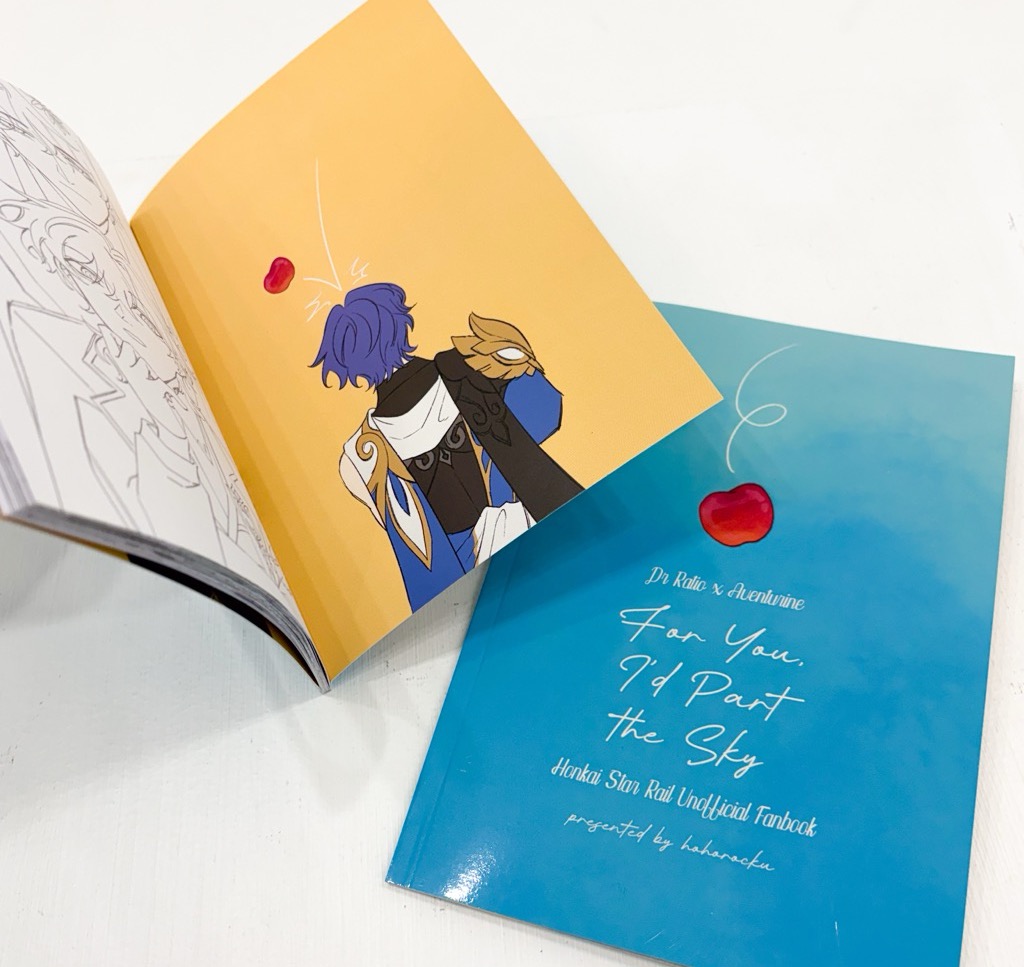
A graphic novel is essentially the same as any other novel or book, which includes the way it is printed. Often, graphic novels will be printed in sizes like A5, A Format, B Format, B Plus Format or B6, and will be bound in either a softcover or hardcover. Like a commercial or retail book, the cover of your graphic novel will be printed in colour. However, unlike other commercial books, the inside pages will also be printed in colour as opposed to greyscale. Because of this, the ideal paper type for printing graphic novels is either gloss or silk with a paper weight of between 150 and 300gsm for softcovers and 80 to 150gsm for internal pages, to ensure the colours pop off the page and pull in your readers’ attention.
For softcover graphic novels, you’ll want to consider PUR perfect binding to ensure durability and longevity, giving your graphic novel a compact, professional finish that creates a square spine for your reader to show off your book on their shelf.
Printing Comic Books
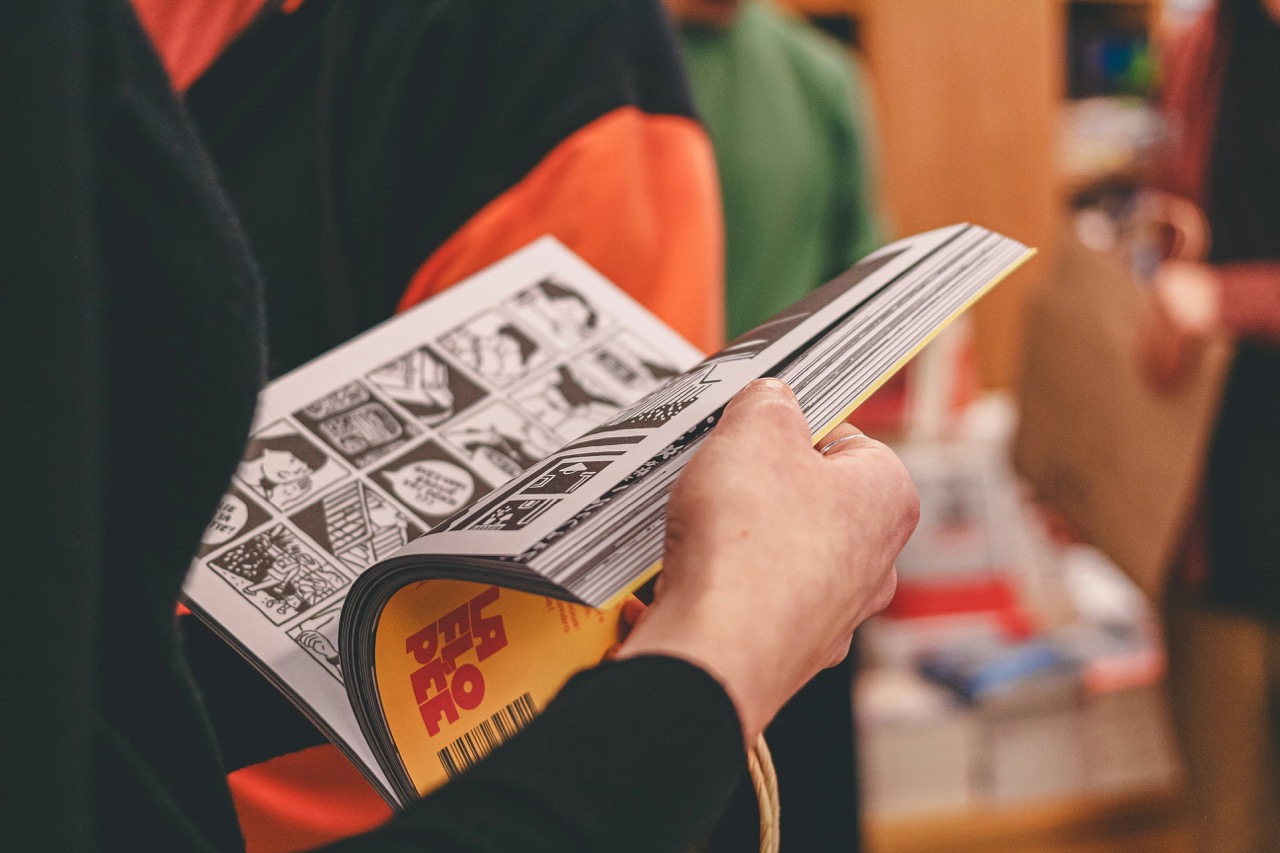
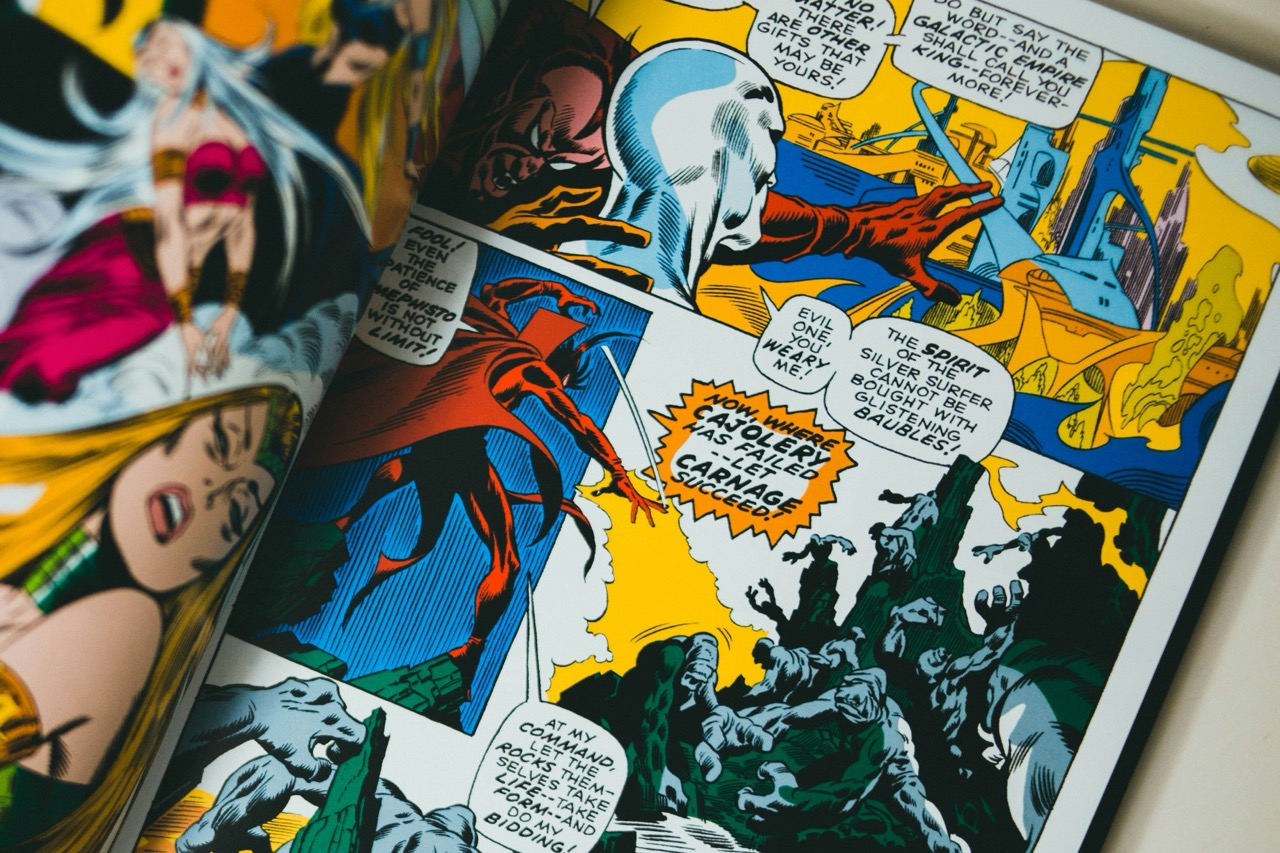
Alternatively, comic books traditionally are a little larger than your average paperback, usually printed in A4 or A5 for a smaller ‘pocket’ version. Whereas the art of a graphic novel can take up as much or as little of an interior page, comic book storytelling unfolds in grid-like panels, making the dimensions of a comic book important in ensuring the panels fit and flow in a way that complements the storytelling. Like a graphic novel, you’ll want to print your comic book (both cover and interior) on either silk or gloss paper with a paper weight of between 150 to 250gm for the cover and 80 to 150gsm for the internal pages.
Since comic books tend to be short, recurring publications, saddle-stitch binding has been the traditional method that works the best for them, to make it easy for the reader to flip through the pages with the ability for it to lay flat so they can fully absorb the beautiful imagery filling the pages.
How To Take Your Visual Storytelling Up A Notch
If you’re wanting to add that extra something to your comic book or graphic novel, one of the best printing embellishments is adding lamination to your book’s cover. Laminate is essentially a thin plastic film applied to book covers under heat and pressure and comes in an array of different styles - like matt, gloss, anti-scuff, velvet, rough, soft-touch and holographic.
Lamination isn’t just about protecting your book’s cover from scuff marks and heavy-handling - it’s also about ensuring that your publication stands out from the crowd. Laminate styles like gloss really make the colours on a cover jump up off the page, and is perfect for a publication aimed at younger audiences or a publication that relies on visual storytelling, like comic books and graphic novels.
Whether you’re crafting a graphic novel or a comic book, it’s important to understand the difference between the two publication formats and the varying printing processes they require in order to create the best version of your book. We’ll be there with you every step of the way, too!
To learn more about our comic book and graphic novel printing and binding services, get in touch with our team today. We're here to help you navigate the evolving world of book printing with confidence.