Published on:
•
Last Updated:
You've done it! You've written a book, secured your ISBN and barcode from your own imprint, and you've got a stack of freshly printed books sitting in your garage (or spare room, or dining table, or anywhere with space for book cartons!). You're probably feeling both proud and slightly terrified, because if you’ve made it this, so…what now?
For decades, publishing houses have dominated the industry for exactly this reason because not only can they help with editing and organising book printing, but their real power lies in their ability to handle distribution for authors. With industry connections and established relationships, they can easily access the right channels to get books onto shelves across the country. It's why so many authors have gone and continue to strive towards the traditional publishing route.
But the good news is that the publishing industry is evolving! You no longer need a major (or even independent) publisher to get your books into readers' hands. Self-distribution is more accessible than ever, and while it takes a bit of work, it's absolutely doable. Let's walk through your options for selling and distributing self-published books in Australia.
Selling Books Directly: Online or at Local Markets
The most straightforward option is selling directly to your readers. Set up a shop on your website or through an online store, or pack up a few boxes of books and apply for a stall to a local market. When you sell directly to readers, you’ll have to handle everything, from taking orders (in-person or via website), packing books, and shipping them out from your local post office or through prepaid labels. This is just like how countless small businesses operate in Australia to sell their products every day!
The beauty of this approach is control as you can manage all the costs to sell and deliver your books, and minimise your margins because you can keep all the profit (minus shipping and materials, of course). It also allows you to connect directly with your readers, as you build your own customer base. There's something genuinely satisfying about hand-packing a book you wrote and sending it off to someone who's actually excited to read it; we technically do this everyday when we ship freshly printed books off to passionate authors.
The main challenge with this approach to selling books is that it’s incredibly time-intensive. Between packing, shipping, managing inventory, and answering customer queries, you can easily find yourself spending more time running a logistics operation than writing your next book, nonetheless marketing and advertising your current book to make sure that people get to your website or market stall to buy a copy in the first place. This option works brilliantly if you've already got a solid online presence, enjoy the hands-on aspect of running a small business, or you're starting small and testing the waters. But if orders start flooding in (fingers crossed), you might quickly find yourself drowning in packing tape and Australia Post queues.
Selling Through Independent Bookstores
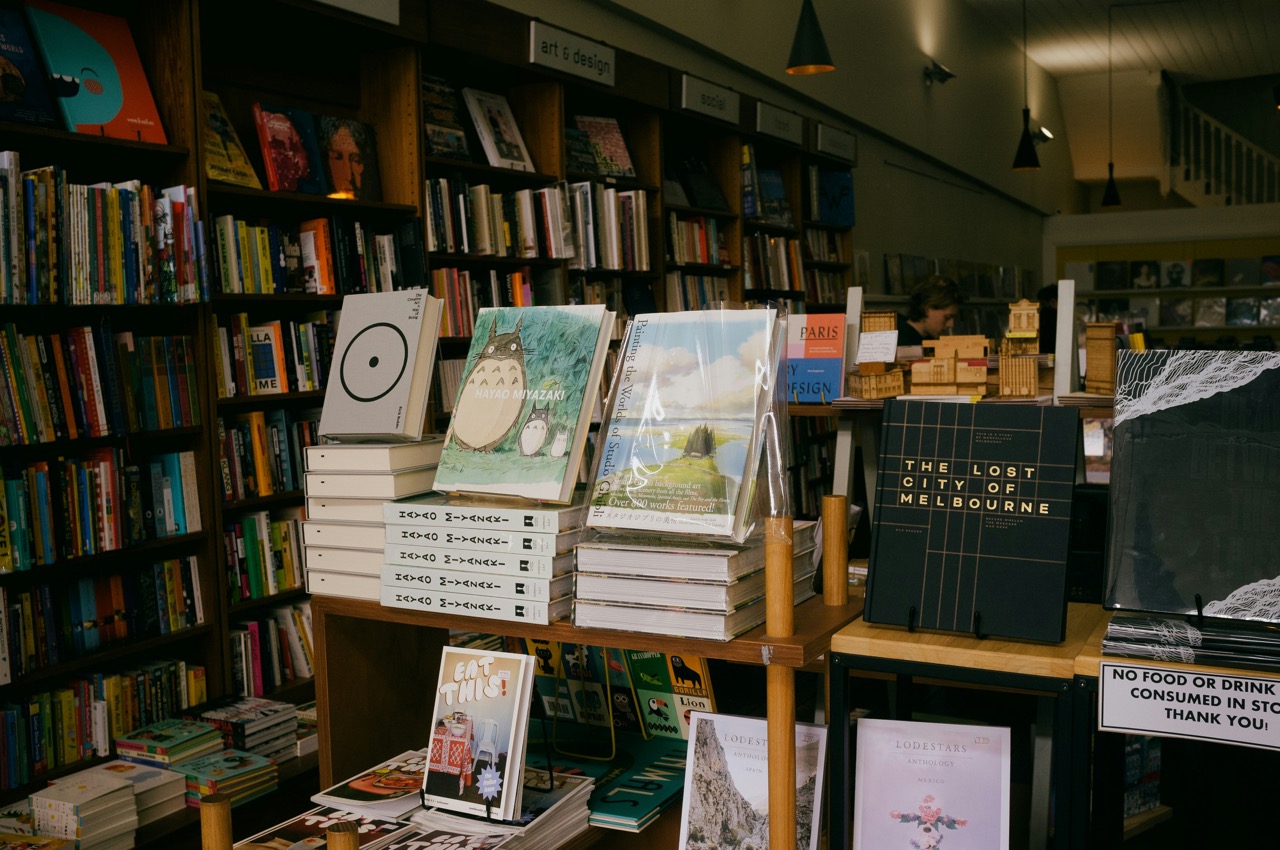
This approach is similar to the previous but steps it up a notch, because it’s all about embracing your networking abilities and connecting with your local community as they can become your greatest asset. While Australia has major retail chains like Dymocks and QBD, many of these companies are run across the country through smaller locally-owned franchises that actually have more flexibility than you'd think. Individual and independent bookstores can often order and stock titles beyond what their main distributor typically carries, especially if customers are asking for them or if it fits their local readership. However, these books likely won't appear on the national website for online ordering, so they're very much a local arrangement.
Then there’s your independent or indie bookstores, who are known for being super supportive of self-published authors. Indie bookshops around the country will generally happily stock self-published books, particularly from local authors. This is grassroots book selling at its finest, and it's experiencing a proper renaissance right now thanks to social media!
With certain books going viral on TikTok or Instagram in the past few years that aren't available through their usual distributors (or still in the process of being published locally), and customers desperately looking for a copy, local bookstores saw the opportunity to give readers what they want anyway. This has definitely helped self-published authors gain more opportunities and the courage to approach bookstores directly to establish their own relationships. It can be as easy as calling or emailing your local bookshop to introduce yourself as a local author, and offering them copies on consignment or wholesale terms.
Understanding Consignment vs. Wholesale Book Selling
There are two main ways that bookstores will generally purchase or organise books to stock and sell:
Consignment (aka "pay-as-you-sell"): This entails you, the author, bringing and leaving copies of a book with the store for an agreed amount of time, during which you still technically own the books. That’s because the bookstore doesn't pay you upfront for the copies but instead, pay you (monthly or quarterly) as each copy of the book is sold. The store will typically take a percentage of the retail recommended price you’ve set for the book (often 30-40%) as their commission. If books don't sell, you can usually reclaim them or they’ll be returned to you. This is lower risk for the bookstore, which is why many indie stores prefer this arrangement with self-published authors, but it also means that it can be quite competitive. Bigger independent bookstores such as Readings only accept consignment submissions between March and September, with a typical agreed consignment period of 2 months, and books are accepted based on the Consignment Buyer’s selection.
Wholesale: This is the more traditional approach as the bookstore buys copies of your books outright at a discounted rate (typically 40-50% off the retail recommended price). Authors get paid immediately, and the books now belong to the store, within their own inventory but it also means that the bookstore is taking on the risk of whether they sell. This is better for your cash flow but can be harder to negotiate as a new self-published author unless you can prove that demand is there, since stores are more cautious about committing or investing in self-published books upfront.
Many stores will give local authors a chance, especially if you're willing to do a book signing or launch event. You’d be able to manage the relationship yourself, including delivering stock, collecting payment (if on consignment), and maybe even sign copies or special editions for that particular store. It takes a bit of courage to take that first step in approaching a business, but bookshop owners and staff are generally passionate people who genuinely care about books and supporting local voices. The worst they can say is no, and the best they can say might lead to your book sitting in the window display with a "local author" recommendation card beside it.

Self-Publishing with Book Distributors in Australia
This approach is where things step up even more into the more formal distribution channels for bookselling in Australia. Distributors are companies that essentially act as the middleman between you and retailers, as they input your books into their systems to make them available for stores to order and hold the physical stock of book copies in a warehouse for you. They typically take a cut of each sale and may charge separately for shipping the stock out to various bookstores around the country. In Australia, the major players include Alliance Distribution Services (ADS, owned by Hachette Group) and Penguin Random House (PRH) Distribution, who are established distributors that supply all major retail chains when it comes to books; from Dymocks and Readings to Kmart and Big W.
For independent and smaller publishers (which includes you as a self-publisher with your own imprint), there are other options.
There are also smaller distributors that work with independent publishers to supply books on consignment or wholesale, such as Woodslane, Peribo and John Reed Books, in addition to more niche distributors that focus on specific book types such as Daintree Books (children’s books), Thames & Hudson (illustrated books), Phoenix Distribution and Brumby State (children’s, gifts, self-help, lifestyle), Books at Manic (architecture, photography, art and design), and Peter Pal (distributing to libraries).
Many new self-published authors use services like IngramSpark, that add books in their ordering system that’s connected to a network of Australian stores, libraries and book retailers including Amazon in Australia and Booktopia for wholesale buying and distribution, even if your books are not printed by them. This is also a service many distributors have; working with them means your titles discoverable in industry databases and ensure that your books can be ordered by retailers or Amazon, however, distributors cannot guarantee orders. Your book might be discoverable and orderable, but whether a store actually decides to stock it depends on demand, algorithms, your book marketing efforts and sometimes a bit of luck.
There are also certain communities that have established connections to help authors with distribution such as The Australian Society of Authors. This local organisation not only has various resources to help you write and self-publish, but also allows you to submit your book to take advantage of an agreement with John Reed Books, in which they provide sales and distribution into Australian bookstores, for ASA members’ print books on a consignment basis. Leveraging existing organisations with helpful connections like this is another way to sell your book faster or at least with fewer emails or hassles, in addition to helpful information and advice from being a member of the society in the first place.
Before picking a distributor, it's worth doing your research to understand each one including their terms, their reach, and their requirements. Some may require minimum print runs, others might have specific formatting requirements, and most will want your book to meet certain professional standards (which is why having an ISBN matters so much for a book). Working with a distributor means giving up some control and a chunk of your profit margin, but in return, you get access to retailers and systems you'd likely struggle to reach on your own. It's a trade-off worth considering, especially if you're serious about getting your book into bookshops nationally.
How to Sell Your Printed Books on Amazon in Australia
Amazon deserves its own mention because, let's face it, it's where a huge number of Australians buy books these days. Many self-published authors go the print-on-demand route and allow Amazon to print and distribute their books together from their Kindle Direct Publishing platform, which gives authors 60% royalties (or 40% if using Expanded Distribution) before printing costs. While this is very convenient, it does mean that authors are likely earning less per book than if they independently printed and distributed their books in other ways. So, if you've already got printed copies and you want to sell them on Amazon Australia, here are some other options that aren't KDP:
Fulfilment by Seller
The first option is close to the direct selling approach because you can sell on Amazon yourself, simply by signing up as a seller and listing your books for sale on the platform. Any author can do this and it’s a distributing option Amazon calls Fulfilment by Seller, as you would still be in control and liable for storing, packing, shipping and customer services with book buyers.
Amazon Easy Ship
The next step up to provide some convenience when directly selling your books (on Amazon or elsewhere on your website or other platforms), is their Amazon Easy Ship fulfilment options, where you still need to stock and pack your book orders, but Amazon will handle the shipping for you. Your orders are dropped off at a location and you’re charged for shipping on a consignment/per order basis. If a reader is unhappy, you’d need to issue the refund but Amazon will take care of returning the book back to you.
Multi-Channel Fulfilment (MCF)
Amazon's Multi-Channel Fulfilment (MCF) service is similar to most other book distributing companies because it allows you to send your inventory to Amazon's fulfilment centres, and they'll handle storage, packing, and shipping when orders come through—not just from Amazon, but from other sales channels too. What makes this tricky for a new author is that it can quickly add up in terms of costs, as pricing depends on how many books you sell and it doesn’t include a whole host of other fees you’ll need to pay as orders start to come in. Currently, their pricing is set to $0.99 per item if you sell fewer than 50 items, or $49.95 per month if you sell more than 50 items, excluding GST, selling fees and other fees such as referral, fulfilment (this is essentially the shipping) and monthly inventory storage fees.
Fulfilment by Amazon (FBA)
Last but maybe not least, is the easiest (but perhaps costliest) option by Amazon. Fulfilment by Amazon (FBA), which works similarly to Multi-Channel Fulfilment but is specifically for sales made through the Amazon platform. It means that you’ve only got to send your books to Amazon's warehouse, they’ll store them, pick, pack, and ship it when someone orders your book. They handle all customer service and returns as well. It also involves storage fees and fulfilment fees, but it has the advantage that your book is eligible for Prime shipping, which is a significant selling point for many customers.
Out of all the options, FBA is the most expensive per unit, but compared to KDP and other print-on-demand platforms, it might be more profitable. It's worth researching, comparing and using Amazon's royalty and seller calculators to consider all your options and profit margin.
Getting Your Books into the World
There's no single "right" way to sell your self-published books in Australia, but it’s certainly become easier to access tools and resources to do so. The best approach is always going to vary depending on the book and the author, and will often involve a combination of the selling and distributing options mentioned above. Many authors sell directly through your website, stock in a couple of local bookstores, and work with a distributor to reach the bigger retailers. It's about finding what works for your book, your budget, and your time.
At the end of the day, the important thing is that we’ve got options. Real, viable options that didn't exist a decade ago. You've already done the hardest part (writing a book) and we assume that you’ve got it printed too (or are looking into it now). The fact that you're figuring out how to get it into readers' hands shows how far you’ve come to becoming the next big author in your local community.
As a professional commercial printer, we don't provide distribution services ourselves, but we're often shipping printed books straight to distributor warehouses across Australia. We see authors at every stage of this journey, from nervous first-timers ordering their first 50 copies to established self-publishers getting their fifth title printed with a run of 1,000 or more.
If you know you want your books professionally printed in Melbourne but you're still weighing up your distribution options, that's absolutely fine. Get in touch for a quote on your first print run; whether that's 50, 100, or 1,000 copies, and we'll get them printed and ready to hit the shelves, wherever those shelves might be.