Published on:
•
Last Updated:
So you've written a book, so firstly, congratulations! Self-publishing is a great way to get your work made and in the hands of your audience, all while maintaining full creative control over your project. From choosing the perfect font to tossing up your chosen method of printing, there are a range of important steps to take between crafting a story and getting it printed onto the page. One of these steps is obtaining an ISBN - otherwise known as an International Standard Book Number. So, what’s the purpose of an ISBN? How do you get one? And do you really need one in order to self-publish your work in Australia? We delve deep into these questions below to figure out the answers.
What is an ISBN?
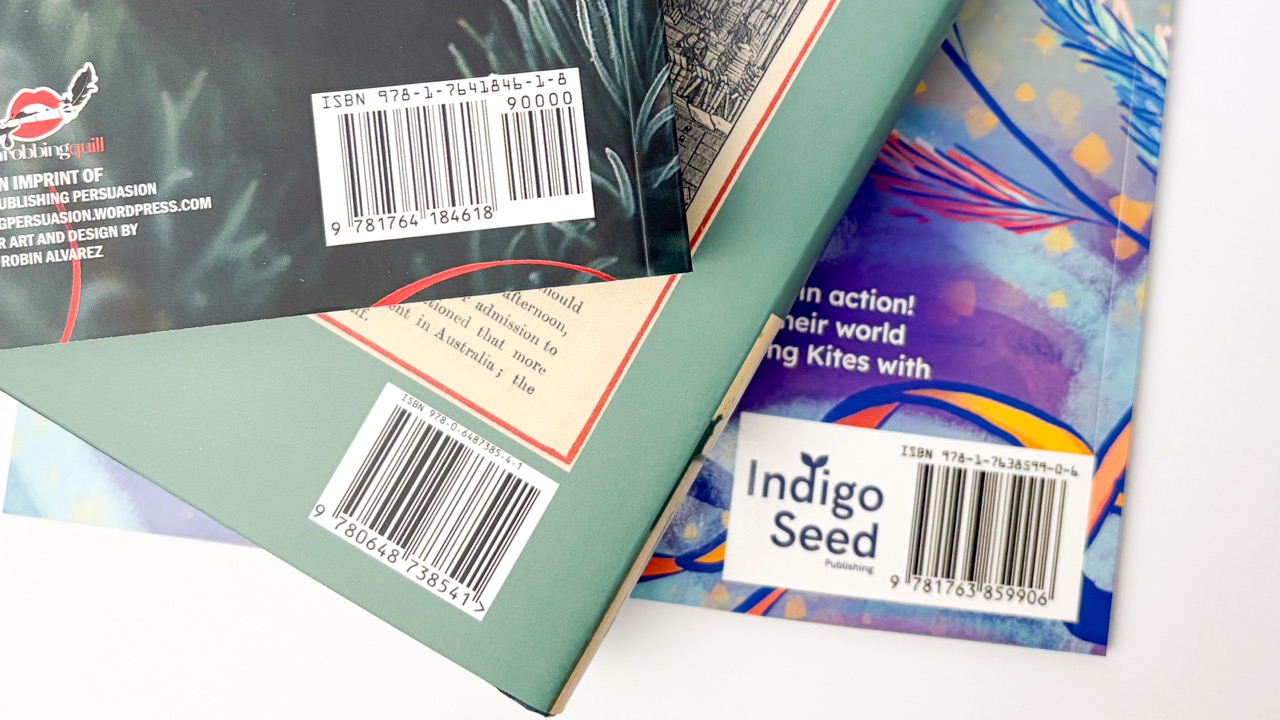
To put it simply, an International Standard Book Number is exactly that - a unique number that functions as a product identifier internationally, usually used by publishers, booksellers, libraries, internet retailers and other supply chain participants. A book’s ISBN not only can identify what specific book it belongs to, but also the book’s edition and format internationally. You’ll usually find a book’s ISBN on the back cover at the bottom, normally above the barcode.
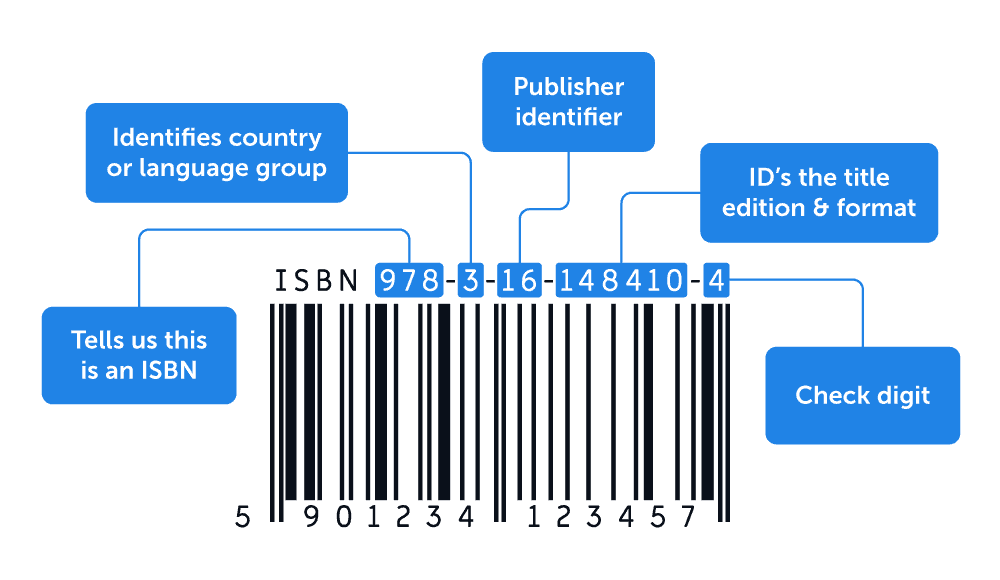
As of 2007, all ISBNs are made up of 13 digits, calculated using a particular mathematical formula and include a ‘check digit’ - found at the end of the ISBN - to validate the number. Across the 13 digits, you’ll find 5 elements that make up an ISBN:
- The first is the EAN ‘prefix element’ - 3 digits at the beginning that are currently 978 or 979 to indicate that this is a book or book-related product.
- The next is the ‘registration group element’ - 1 to 5 digits that detail the specific country, geographical region or language area in accordance with the ISBN system.
- After this, you’ll find the ‘registrant element’ - up to 7 digits that identify the particular publisher or imprint.
- Then, the ‘publication element’ - up to 6 digits that specify the particular edition and format of a title.
- Lastly, the ‘check digit’ ties the ISBN together.
When you register an ISBN, it carries a wealth of metadata about your book, including:
- Title and subtitle
- Author name
- Other contributors (editors, illustrators, photographers, etc.)
- Publisher details
- Format (paperback, hardcover, ebook, audiobook)
- Cover image
- Genre and subgenre
- Date of publication
- Availability status (so bookstores know whether they can stock it)
- The recommended retail price (RRP)
This information helps retailers, libraries, and distributors catalogue and sell your book efficiently.
What About ISSN and ISMN?
While we're on the topic of identification numbers, you might come across two other acronyms that come up every now and then, amongst a slew of other identification numbers, and these might be relevant depending on the type of book you’re working on.
An ISSN (International Standard Serial Number) is used for periodicals. This means magazines, journals, and newspapers but if you're publishing a one-off edition or issue, you won't need one of these. ISSNs are free of charge for approved Australian serial publications that are by Australian publishers and published in Australia, and are available upon application from the National Library of Australia’s Australian ISSN Agency.
An ISMN (International Standard Music Number) is specifically for printed music publications, such as sheet music, which might be important if that’s the book you’d like to publish! This number is also available through the National Library of Australia, under their Australian ISMN Agency.
How Many ISBNs Should I Buy?
The number of ISBNs you buy will depend on how many formats and editions of your book that you’d like to publish. If you’re planning on a paperback and a hardcover edition, then you’ll need an ISBN for each format. Same for if you have a book that you’ve already published and a newer revised version; that will need its own new ISBN too.
The ISBN identifies not just your book title, but also the specific edition and format—whether it's hardback, paperback, ePub, PDF, Mobi, or audio. Any variation requires its own unique ISBN so retailers can help readers understand exactly which version they're purchasing.
How to Buy an ISBN in Australia
In Australia, there is only one official agency that works alongside the International ISBN Agency to help assign unique ISBNs to books and book-like products (like audio books). This agency is Thorpe-Bowker, a publishing services company based in Melbourne, Australia. If you’re thinking of getting an ISBN, it’s important to obtain one through an official route as others may not identify the publisher of your title accurately, which can impact any business you and your book undertakes in the publishing industry supply chain.
It’s easy enough to get an ISBN from Thorpe-Bowker - you can even purchase one from the comfort of your home through their website. There are also discounts if you’re buying ISBNs in bulk - for example, if you are self-publishing a handful of titles or editions - and so you can save some money by doing it all at once. Thorpe-Bowker also offers affordable packages that bundle ISBNs with barcodes, which makes the whole process pretty straightforward.
What About Amazon KDP and IngramSpark?
Alternatively, if you are thinking of self-publishing your work through platforms like Amazon KDP (Kindle Direct Publishing) or IngramSpark, these websites also offer you the opportunity to buy an ISBN through them.
IngramSpark provides a free ISBN that you can grab while setting up your book in your account. However, this ISBN is non-transferable and owned by IngramSpark, which means you can't use it if you decide to distribute through other channels later.
Amazon KDP offers two choices for paperback and hardcover books:
- Use a free ISBN from KDP
- Purchase your own ISBN
The catch with KDP's free ISBN is that it can only be used on their platform—you can't use it to publish or distribute your book anywhere else.
ISBN and Establishing Your Imprint
When you purchase your own ISBN, you have the opportunity to establish your own publishing imprint. But what exactly is an imprint?
An imprint is essentially the publisher name associated with your book's ISBN. If you buy your own ISBN, you can list your own publishing imprint—this could be your business name, your brand, or any professional name you choose. It's a brilliant way to establish yourself and build recognition, especially if you're planning to publish multiple titles.
If you use a free ISBN from KDP, your imprint will automatically appear as "Independently published." There's nothing wrong with this, but it doesn't give you the same branding opportunities.
In book printing, imprints appear on the copyright page inside the front cover, alongside details like the title, subtitle, author name, and publisher. When you set up your book with Bowker (Thorpe-Bowker's parent company), you can allocate your ISBN to your chosen imprint name.
All registered imprints belong to you or your organisation, and while it's not mandatory to include one, having an imprint is particularly valuable if you're producing more than one book. If you have multiple imprint names, you might want to open separate accounts for each to track data more efficiently.
One crucial note: If you're using your own ISBN with platforms like KDP, they'll verify that your book's imprint matches what's registered with the ISBN agency. Any mismatch—even something as minor as extra spaces at the end of the imprint name or different capitalisation—will prevent you from publishing. So be meticulous when entering these details, and avoid placeholders like "unknown" or "n/a."
Do You Need a Barcode to Self-Publish in Australia?
So, if you've sorted your ISBN—now what about barcodes?
A barcode is the graphical representation of your book's ISBN—those black and white lines you see on the back cover of virtually every book. The key detail here is that an EAN barcode incorporates the ISBN, so before looking at barcodes, you’ll always need your book’s ISBN first. Barcodes allow books to be scanned by machines, which facilitates automated sales and inventory tracking. Most large retailers require them, and when it comes to books, it’s not always just a generic barcode either, but a Bookland EAN Barcode.
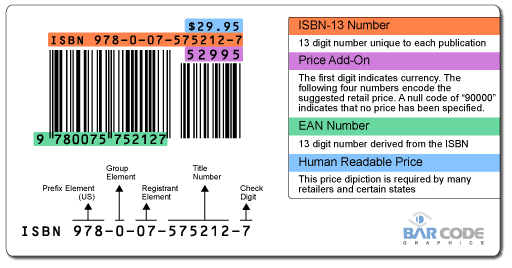
The EAN stands for European Article Number, and you’ll recognise this number from the ISBN number itself, because all books start with the prefix 978, as that is the EAN product category used to indicate that it’s a book or book-related product (and that the barcode has an ISBN!). Therefore, all Bookland EAN barcodes visualise the ISBN number to be recognised within the universal barcode system, followed by a 5 digit supplemental code (also called the EAN-5) to indicate the book's currency and price. This is why these barcodes are the most widely used formats in the publishing industry, and many large retailers will require them to sell books.
Including the Recommended Retail Price In Your Barcode
It’s also best practice to know how much you’d like to sell your book before buying your barcode, as it will incorporate the supplemental code (EAN-5) that encodes the currency and price. This is visible as a sub-section of the barcode (see diagram below), and often also states the recommended retail price (RRP) above the ISBN.
If at some point you need to change the price of your book, thankfully the barcode isn’t tied with the ISBN, so you can always buy a new barcode and assign a new RRP. That being said, if your book’s price does change, most distributors and customers won’t complain if a book costs less at the checkout than what is indicated on the back cover, but it is a bit more unusual if a book costs more than the printed RRP on the back.
Where Can You Get a Barcode?
You've got several options:
Thorpe-Bowker: You can purchase your barcode alongside your ISBN, which is convenient and keeps everything organised in one place.
IngramSpark: If you don't supply a barcode, they'll place one on your book cover for you.
Amazon KDP: They handle barcodes in a few ways:
- If you use their Cover Creator tool to design your cover, they'll automatically add a barcode (which may include a Transparency code when printed)
- If you upload a print-ready PDF that includes a barcode, they'll use it—just ensure it meets their formatting requirements
- If you upload a PDF without a barcode, they'll add one for you (again, possibly with a Transparency code)
Other barcode providers: You can buy barcodes separately from providers like Barcodes Australia or generate one free online.
For most self-publishers, we'd recommend going with Thorpe-Bowker simply for ease of use. For a relatively low cost, you can manage all your ISBNs and barcodes in one spot, which makes life much simpler when you're juggling all the other aspects of self-publishing.
Where Do You Put an ISBN and EAN Barcode?
The industry standard is to put the ISBN and barcode on the lower right section of a book’s back cover. Although it’s traditionally aligned to the right, many books also have it placed aligned to the centre or left depending on the cover design and what else the publisher or designer wanted featured on the back. Many publishers may also include other bits and bobs around the ISBN and barcode for branding or practical uses. This includes their logo, website URL, an icon or text to say here’s an eBook version available, an FSC icon to show that the book is using sustainable paper stock, a Printed in Australia icon, the category or genre (for where it should be shelved in a bookstore), the cover designer and/or sometimes even the author’s photo.
If you're publishing a hardcover book, the ISBN and barcode should be in the same position on the back of the dust jacket or the book’s back board. When books don’t have a dust jacket and don’t have the best surface to print on, like cloth-bound hardbacks, it gets a bit tricky and you’d usually need to contact a specialty barcode label printer.
The National Library's Prepublication Data Service
While you're sorting out your ISBN and copyright page, here's something else worth knowing about: the National Library of Australia offers a prepublication data service that's a valuable addition to your book's copyright page. This free service allows you to register your publication before it's released, and you'll receive a Cataloguing-in-Publication (CIP) data block to include on your copyright page. This data helps libraries catalogue your book accurately, making it easier for them to add your title to their collections. It's a simple process that adds credibility to your publication and supports its discoverability in library systems across Australia.
While you're working on your copyright page, you might also notice that many books include details like "Printed in [country] by [printing company]." If you're using a local printer and want to highlight that your book is Australian-made, reach out to your printing company—most are happy to give you permission to include their details, which certifies that your book is locally printed.
Do Self-Published Authors Really Need an ISBN?
Now that you know what an ISBN is and how to get one as a self-published author in Australia, let’s take a closer look at whether you actually need to obtain an ISBN. In short, if you’re planning to have your self-published book available in the market for customers to purchase, the answer is yes.
As the function of ISBNs is to make them searchable on databases and help make them accessible to wholesalers, distributors and retailers so that they can find and stock them, it’s vital for authors who are wanting to get their books in the hands of potential readers to have an ISBN for their book. Because of this, many book retailers will only stock your book if you have an ISBN attached to it, so you won’t even be able to get your book through the bookstore door without one. However, if you’re self-publishing a book for the purpose of handing it out personally, selling it at book fairs and markets, or selling it through your own means - like on social media or through a website - meaning the book won’t come into contact with other retailers, then you can get away with not having an ISBN. Even still, this might close off some opportunities to further sell your book through legitimised or more popular avenues - like your favourite book shop. If you’re in doubt, it’s best to go ahead and obtain an ISBN and EAN barcode for your work.
After the long and winding road to self-publishing your book, getting your project in the hands of readers is the final step. To ensure your book is getting the exposure it needs to sell, getting an ISBN is a great leap forward in turning your self-published book into a product for your audience.
To learn more about our printing services for self-published authors and get started on your printing journey, get in touch with our team today. We're here to help you navigate the evolving world of printing with confidence.