Published on:
•
Last Updated:
If you’ve noticed an uptick in the amount of legacy magazines resuming their print publication or fresh new titles popping up on the scene, you’re not alone. It’s now easier than ever to create, print and publish your very own independent magazine, thanks to technology offering beginners a helping hand, as well as social media providing niche markets to tap into. While the modern state of larger magazines is in an interesting place, it’s perhaps better than ever for indie creators to be putting their ideas into print.
As you may have gathered, there’s much more to an indie magazine than the stories and images it holds within its pages. We’ll leave all of the magazine’s content up to you, or you can check out some helpful resources that provide nifty tips and tricks to get you thinking about how you can approach what will be filling its pages from Huck Mag and creators on Medium. Once you have all your ideas ready to go, it’s time to think about how to turn your indie magazine from a file on your computer to a hard-copy production.
First Thing’s First: Think About Size & Format
There are a variety of different size formats that magazines can take. While most use the typical A4 standard (210 x 297mm), you’ll also find magazines printed in the B Plus format (135 x 210mm) and C format (153 x 237mm). Choosing your size of indie magazine will come down to what you’re including, who you’re hoping will buy your magazine, and your own personal taste.
The A4 size is the largest of the three options and is the one you’ll most often see major international magazines printing in. This gives your magazine a professional look, while also being practical to hold and stock in places built for selling magazines. The C format is quite a bit shorter and leaner, and the B Plus format is even smaller. B Plus is a great size to consider if you’re hoping to publish an indie magazine that is more aligned in look to a zine or a pocket-sized magazine.
What Paper Weight, Finishes and Colours Should You Consider?
When it comes to publishing an indie magazine, the details are in the design. Whether you’re crafting a publication to explore a niche topic of interest or you’re wanting to inform readers on a particular matter, the beauty of magazines is that they’re easy to read and aesthetically pleasing.
There are a range of different ways you can design your magazine to make it a pleasant experience for your audience to read, like improving the accessibility and ensuring the print quality is high, however a lot of what makes your publication stands out comes down to the nitty gritty of the physical product.
You’ll want to print your magazine in full colour to capture the attention of readers, as well as potential buyers, including both the cover and the internal pages. As for the paper finish, you’ll want to have your magazine printed utilising a gloss or silk finish so that your product is made of lightweight material while still holding onto that gloss shine.
Magazine covers can also be finished with matte or gloss laminate depending on the texture you’re after. Both look just as professional and captivating, so go with whatever feels right in your hands. When it comes to considering the right paper weight, we recommend 250 to 300gsm for the cover and 100 to 150gsm for internal pages.
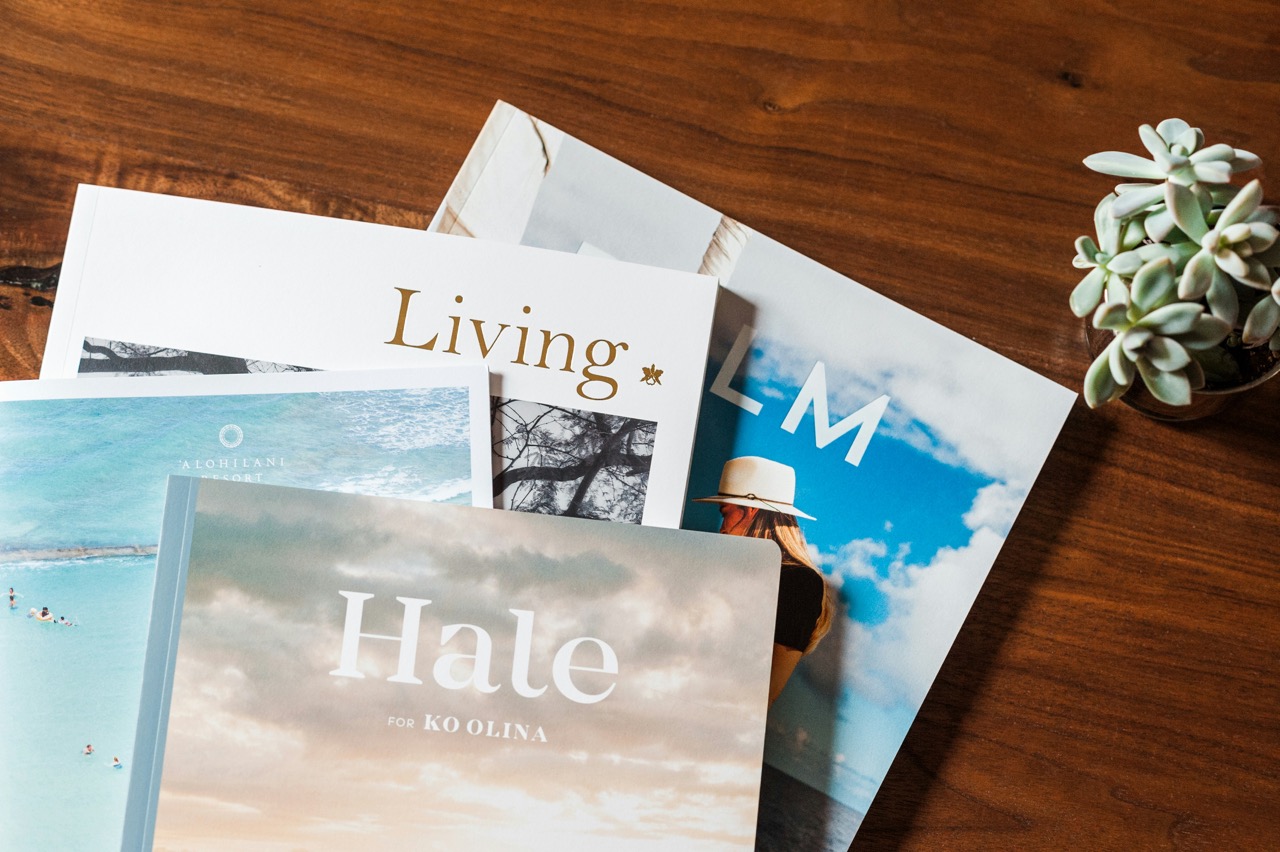
PUR Perfect Binding Vs Saddle-Stitch Binding For Your Magazine
Now, let’s take a look at the best method for binding your magazine - in other words, how it all comes together. You can choose between PUR perfect binding and saddle-stitch binding, although there are a few differences between the options depending on what you’re after for your finished product.
Perfect binding means that a flat, square spine is created by the pages being glued together at the spine and attached to the cover. PUR (Polyurethane Reactive) glue is what will hold it all together - a super durable, temperature resistant, flexible glue that maintains a professional finish. PUR perfect binding is the most common binding method for magazines, being an incredibly strong technique that ensures the publication doesn’t only last as long as one read-through, but also a whole lifetime’s worth of them.
On the other hand, saddle-stitch is a binding method that works by having folded sheets stapled along the spine, making it both economical and fast in production when crafting magazines. There are a few limitations of saddle-stitch binding for printing magazines, such as the product needing to have a total page count divisible by four (in order for the sheets to fold correctly), there being no spine to display titles or issue numbers, and it also being a little less durable than PUR perfect binding. Consider the desired durability, page count, quality, time and cost you’re after to help you weigh up these two methods of binding your indie magazine.
How Many Copies of Your Indie Magazine Should You Print?
Unfortunately, there’s no magic number of magazines you should print on the first run of your indie magazine, although there are a few things to help you land on a number that is suitable for your product.
Have a think about how you’re going to distribute your magazine. Will you be able to stock it at some independent bookstores, or can you host a stall at a book fair or exhibition to spread the word? Do you already have a following of readers interested in purchasing your mag? Will you advertise on social media, or use any other forms of digital communication - like blogs, newsletters, websites or video channels - to let people know what exciting things you have in store? These are all good ideas to take into account before you work out how many copies of your indie magazine to print.
You’ll most likely want to go with digital printing over offset printing when choosing a printing method for your magazine. Offset printing is only worthwhile if you plan to print a lot of copies, and given the indie nature of your publication, it’s more affordable to start with a smaller amount of copies using digital printing. Some indie mag veterans suggest printing between 1000-2000 copies to start, although it can still take quite a while to sell all of those depending on your audience market and the content you’re producing.
The first issue of an indie magazine is always the hardest to make the decisions around, so it’s best to start small as you find your feet and work out which methods suit your style best, and then scale up from there. Plus, if you start your indie mag with a shorter print run, you can always come back to the printer and get more made.
This sentiment is relevant to every part of the indie magazine printing and publishing process. The best part of making a magazine is that you can learn from your mistakes (and achievements!) and channel those into your next issue. Good luck!
To learn more about our magazine printing services and how modern digital printing technology can benefit your next project, get in touch with our team today. We're here to help you navigate the evolving world of magazine production with confidence.