Published on:
•
Last Updated:
In this Q&A, we explore how self-published authors are utilising book design innovations to transform printed books into collectors items.
There’s more to book printing than just the story contained inside a book’s covers. Great book design doesn’t just further the story, themes and ideas of the book, but also makes this parcel of printed narrative feel special in the hands of readers, creating something they want to collect and treasure.
While special embellishments in book printing aren’t always accessible for those with smaller budgets or limited access to machinery, a community of indie book designers and self-published authors are leading the charge in innovative book design to work their way around inaccessibility with clever tactics and inventive techniques. Below, Juliette from the FolioFox team chats to indie author Tansy Rayner Roberts about how she’s using book innovation to take her work from a pile of printed pages to a beautiful keepsake for book-lovers to treasure.

Q&A with Tansy Rayner Roberts: How Authors Are Driving Book Innovation
Q: Hey Tansy, thanks so much for joining us! Tell us a little bit about you and the work you do.
Hi Juliette. I’m a mostly-indie writer these days, but I’ve been writing and publishing stories and non-fiction across various platforms, publishers etc. since the late 90s. I’m based in Tasmania, and I write across multiple genres. Locally, I’m best known for my Hobart-set murder mysteries; across Australia, I’m best known for cosy and humorous fantasy and SFF; internationally, I’m probably best known for the popular podcasts I’ve co-hosted over the years, including the Hugo Award winning Galactic Suburbia, and the all-female Doctor Who podcast Verity!, each of which lasted a decade.
Q: As an indie author who has published a plethora of books over a decorated career, what have been the biggest shifts you’ve noticed in the Australian book publishing landscape compared to when you first started out?
So many! The ebook was a massive game changer, and I saw smaller independent publishers pivot into the digital space much faster and more effectively than traditional publishers – big publishers in particular take a long time to absorb change. I worked with people in the “small press trenches” in the early 00s and there was a lot of really exciting experimentation with digital books and zines, even before they went mainstream with the devices we have now, like the Kobo and Kindle. Crowdfunding was another huge opportunity to level the playing field for indies, and I’ve been working in that space since before Australians were even allowed to set up Kickstarter accounts!
More recently, the biggest shift has been towards the special editions and the excitement around truly pretty books – not instead of ebooks, but alongside them. The rise of indie publishing, thanks to the affordability of Print on Demand and ebook publishing, has been a huge shift, and we’re not only seeing some amazing commercial successes in the indie author space, but...
It almost feels like traditional publishing and indie are becoming two completely different industries.
One of the biggest and most significant eras for fantasy fiction in Australian traditional publishing was the HarperVoyager imprint under editor Stephanie Smith, pretty much from the launch of Sara Douglass’ BattleAxe in 1995 through to Stephanie’s retirement in 2012. This was an extraordinary era of investment in local fantasy writing, big fat fantasy trilogies, and the massive commercial success of many Australian names like Trudi Canavan, Traci Harding, Glenda Larke, Karen Miller and more. Other publishers were scrambling to try to build lists as strong as Voyager had for that amazing decade, and that competition meant more opportunities for new and emerging writers.
There’s been nothing like it since – and while there were a lot of reasons why traditional fantasy publishing changed so drastically again about 15 years ago, I don’t think we can emphasise enough the amazing effect that Stephanie Smith had, and what a loss she has been to Australian publishing. It’s hardly surprising that so many Australian and New Zealand fantasy authors went indie as soon as it was feasible, given how hard it is now not only to land an American publisher, but to manage a career as a traditionally published author when the best publishing opportunities now are all overseas.
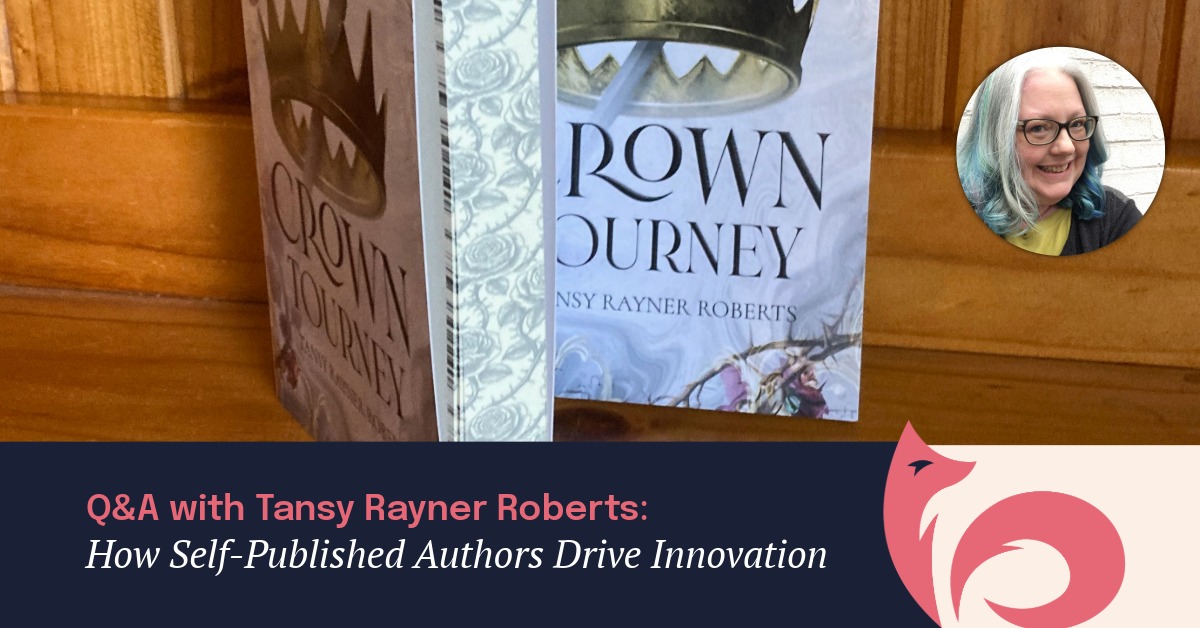
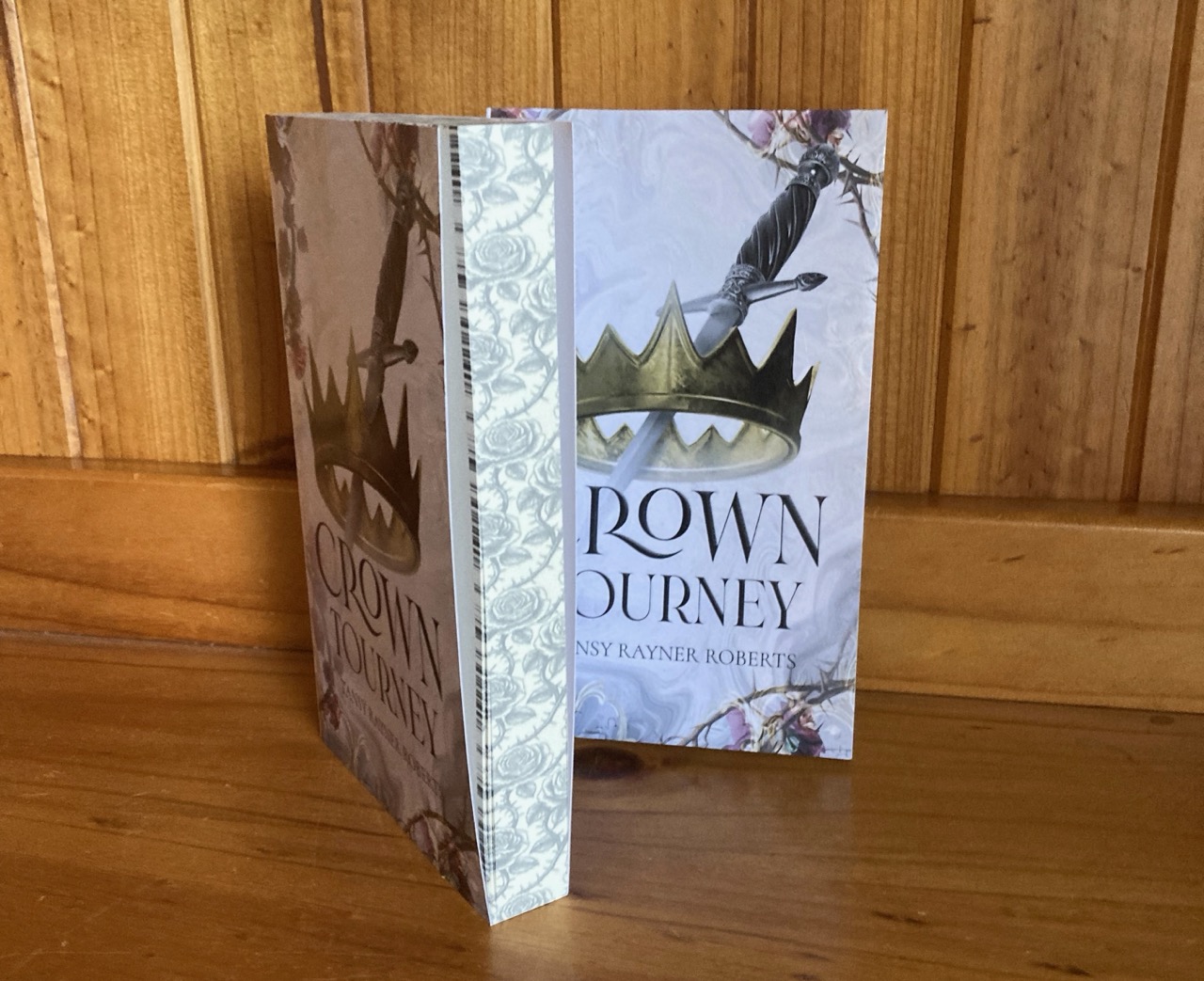
Q: When did you first experiment with details on the edges of your books – like the rose page borders in your book Crown Tourney – and what prompted you to add this addition to the printed product?
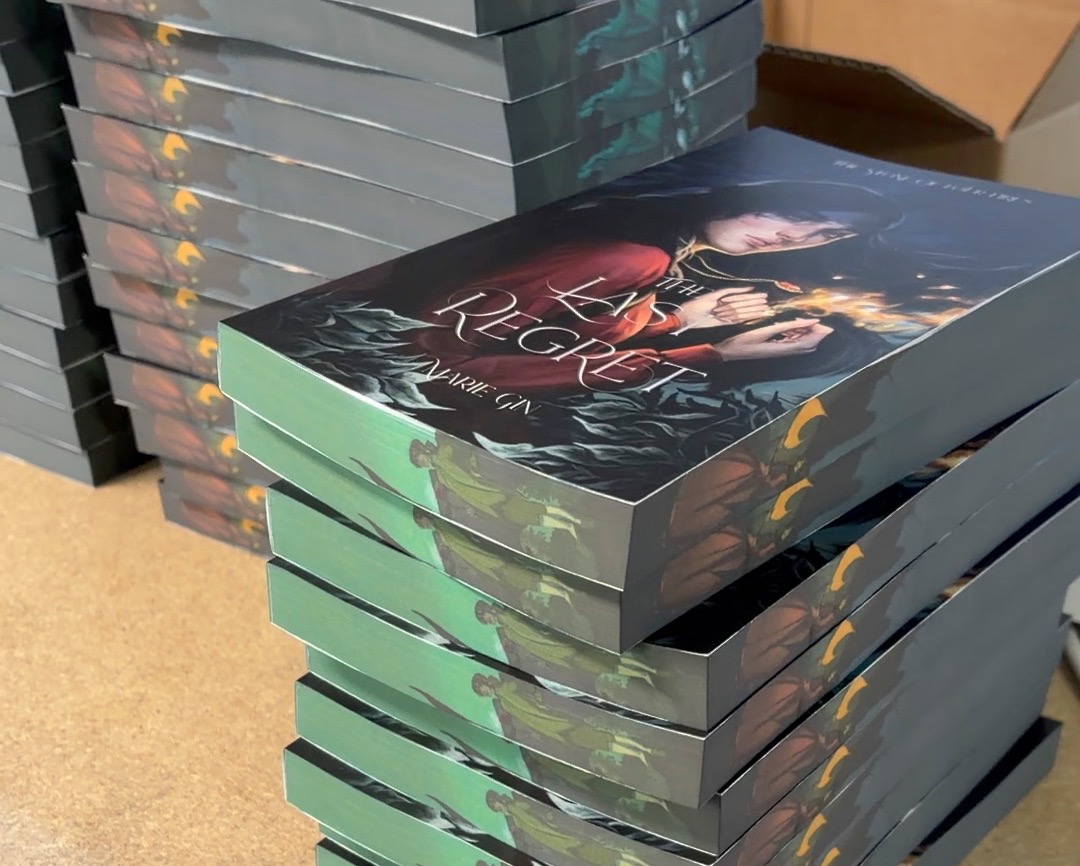
Crown Tourney was my first! I heard about the ‘forced edge’ technique and thought I’d give it a go, as it seemed a lot more affordable and less complicated than going with sprayed edges, which was all the rage at the time.
Q: How do you think adding printing flourishes like patterned edges impacts the reader’s relationship with the book?
Readers are really craving the pretty book experience. It’s been led by TikTok which is one of our biggest drivers of publishing trends right now, but I think that has just brought out something that was always there in readers. We LOVE beautiful, fancy copies of our favourite books. Until quite recently, the main books that got this kind of treatment were the literary classics – which is why I own like seven different editions of Pride and Prejudice. As always, romance readers were the first to push a new trend, like the special editions we are now seeing with romance, romantasy and fantasy releases.
Q: How do you go about crafting these edge details? Is it something you design or do you get other artists involved?
In this case I went hunting for a designer who specialised in edges, and she put a design together for me and formatted my print-ready PDF. It was quick, easy and cheap, which is pretty unusual in this industry! Unfortunately the down side is that if I need to change the text I have to go back to that designer… and when I did, she had completely re-formatted her business, so I can’t repeat exactly the same process again.
Having said that, in the last couple of years Vellum (the software at the heart of most indie authors’ publishing empires) has updated to make printed edges easier, and even recommends designers. It’s now apparently easy to buy exclusive or non-exclusive designs and input them yourself so you can make your own updates. I haven’t tried it yet but as I’ve made some edits to the Crown Tourney book recently, it’s on my list of experiments to try in the next month or so.
Q: Do you see this innovative technique as a broader cultural shift in the indie book printing world?
Absolutely. Readers are craving the in-person experience of buying from authors directly, which is why we are seeing a huge rise of book fairs and other author-centred events, and that means we can directly see how readers are drawn to books with cool visual features. Something like printed edges is rare in that apart from a one-off design fee (if you don’t have the skills yourself), it doesn’t actually add to the cost of the individual book as most special edition features do.
Q: What other innovative print techniques have you noticed gaining popularity in the Australian book publishing scene recently?
Illustration and illustrated details such as headers and breakers are becoming more and more of a desired feature, and while this does mean paying more to artists (and we should ALL be paying our artists), it’s a big draw for readers. Patterned/pretty endpapers are a growing popular feature in the fancy special editions, so I think there’s a real hunger in authors to be able to incorporate that into regular POD instead of being limited to large print runs or overseas publishers. I’m seeing a lot of experimentation with inner colour pages and reverse printing (i.e. white text on black) which I don’t love personally, but those who do REALLY do.
A lot of trends and techniques are driven by opportunity. Right now, there are very few affordable options for Australians to print special editions in Australia – and by affordable I don’t just mean that we pay our printers more which makes sense because everything costs more in Australia, but being able to do short run special editions rather than having to lay out $10-20K up front for a whole print run just because you want nice endpapers or gold foil or nice edges.
Q: How do production limitations allow creativity to flourish in book designing and printing?
The budget affects everything – and it should. Crowdfunding does allow authors to create amazing special editions, but I worry when I see authors with very small audiences spending huge amounts of money to launch a Kickstarter that can’t possibly end up covering their costs.
Limitations often make us more creative, though, not less! As long as we embrace the challenges.
I think the rising travel and postage costs right now gives Australian authors an opportunity to build readership in our own country. I see authors worried that most of the readers are in the US – and maybe that’s true in sheer numbers if you only look at Kindle sales. But there are so many hungry readers and book influencers here in Australia who are sad that the authors they like in the US won’t post their fancy book boxes and ARCS out of the country… so now is a great time to convince them that it’s worth trying out local writers.
Part of the benefit of my very long career is that I started indie publishing with a lot of local readers who know me and are still following my work – I’m not just an anonymous face on the other side of an e-reader. They’ve met me at cons or festivals, we’ve had conversations. I know that when I run Kickstarters for instance I get a lot more Australian backers than many other authors I know in the same genres who live here, but most of their audience is overseas.
One of the biggest changes that helped indie authors here in Australia in recent years was allowing us the option to print books with very light groundwood pages Print on Demand – it used to be that you could tell a self-published book because the paper was twice as heavy & shiny as anything from a traditional publisher.
I think those of us who are still in the, let’s say “mythical midlist” of indie publishing, as in not quite hitting the giant numbers, make a lot of our magic using DIY skills. If you can’t afford to outsource, you can upskill! I’m excited to do more experimenting with printed edges, for example, but I’m also looking into doing my own edge painting or deckling. With my Kickstarters and the new online store I’m opening, a lot of my merch is personalised or hand-made, and readers get really excited about that – even if it isn’t quite as cost effective as ordering bulk mass-produced merch from China.
That’s part of what makes me so sad about what’s happening with AI – particularly the use of AI art in publishing – and I haven’t talked about it so far because it’s SAD. But I see so many authors arguing that they have to use AI because they can’t afford to pay artists, and that’s devastating. If you can’t afford to invest in an artist for your cover design, or character art – and there are plenty of up-and-coming starter artists who charge far too little for original work – then using a make-the-world-worse machine built on stolen art is not the answer.
Becoming an indie author is running a small business. If you can’t afford to outsource the parts of it you can’t or don’t want to do, and you don’t have the time and inclination to learn those skills, then maybe this isn’t the right business for you. We rightly scorn any business that doesn’t pay its staff properly, why would it be OK to cut corners in the creative industry?
Why Self-Published Authors Opt for Digital Book Printing Over Print On Demand
As Tansy pointed out in our discussion, the introduction of Print On Demand services in Australia led to a change in the way indie and self-published authors could get their work into the hands of readers. Print On Demand allowed self-published authors access to a kind of affordable and convenient printing that they couldn’t before, in addition to printing their books on light groundwood pages. This was at first a game changer in how indie authors could create and print their own books in a way that was indistinguishable from commercially printed books.
However, as the indie author industry has grown in the last several decades, so too has the printing options for their work. Now, the method of digital printing means that through the use of digital presses with laser or inkjet technology that applies ink or toner directly to the paper, this printing technique is affording indie authors with exceptional flexibility and incredible turnaround times. No change or customisation is too small or tedious for digital printing, meaning self-published writers can print their work for relatively low up-front costs, especially for smaller runs.
At FolioFox, our digital book printing method is a match made in heaven for authors wanting to self-publish their work. While we don’t offer Print On Demand services, we have mastered the art of digital book printing to turn your pages of ideas into a fully-realised book with flexibility, affordability and speed. Plus, our most popular lightweight, creamy book paper makes your book pages as professional as traditionally published printed books, so you know your labour of love is in safe hands with us as we bring it to life with the finesse and professionalism it deserves.
If you love reading science fiction and fantasy stories, make sure to check Tansy Rayner Roberts’ books on her website and keep up with everything she’s doing on Instagram.
If you’re wanting to bring your own self-published book to life with embellishments and extra special details, get in touch with us to get started on printing your own collectable book.