

Published on:
•
Last Updated:
Welcome to the world of self-publishing - a means of turning your words on the page into a parcel of storytelling and connection for your readers. The beauty of this method of publishing is that full creative control is completely yours. Publishing a book is about more than just sending your document to the printer - it’s a wide-ranging process that touches on a range of different parts of the publishing industry. Once you have your printed book, you’ll also want to consider how to market it, where to sell it and how to get it into the hands of the readers that will love it. Let’s dive deep into the world of self-publishing and the processes involved beyond printing your book.
Self-Publishing is More Than Just Printing
Making up the machine of self-publishing is an array of cogs - each turning and twisting in their own specific way in order to keep the machine going and bring your self-published book to life. Despite what you may think, this machine is a lot more complex than just hitting print on your book. Here, we’ll break down each part and understand its function, making it easier to understand how the self-publishing machine works, and - most importantly - how you can get your own well-oiled machine up and running.
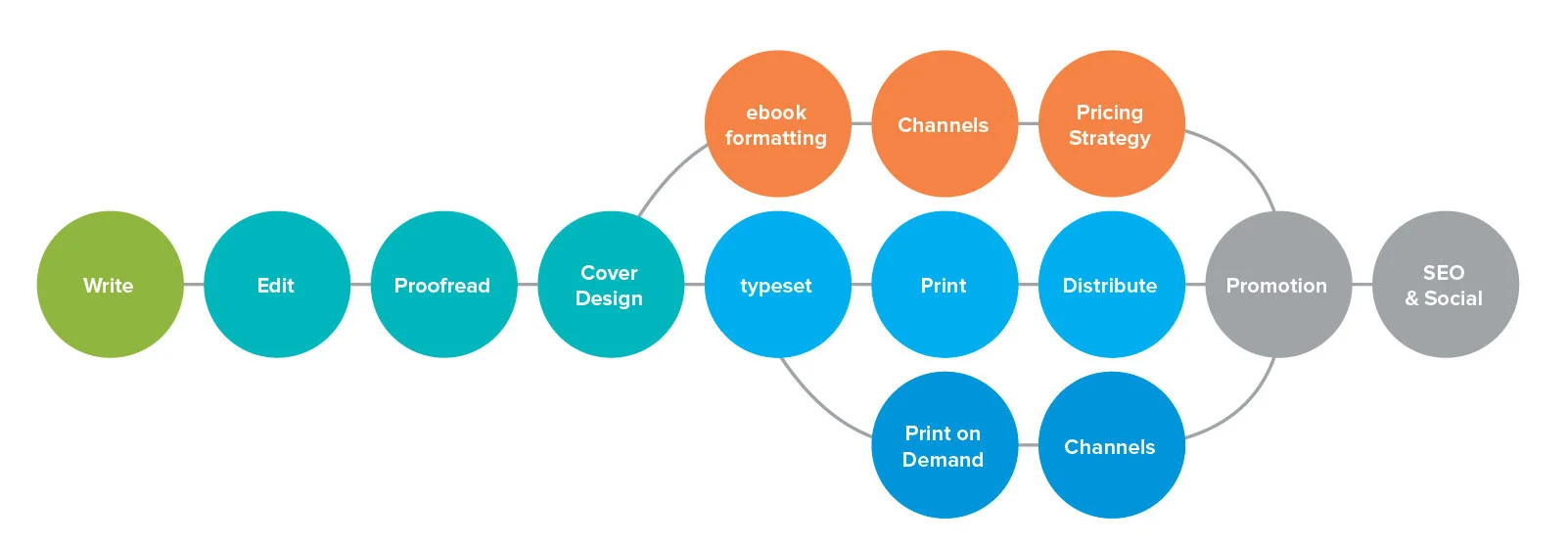
As any author knows, the very first step in the publishing process is writing! The favourite step for many, writing is when you let all of your ideas run wild on the page, crafting a story world and narrative that will be a vessel of connection for your reader. But before any readers come into the mix, there are a bunch of steps to get your story ready for publication. After the writing is done, then comes editing and proofreading - both vital steps in polishing your work to the best version it can be. Next is the cover design which often includes registering an ISBN and barcode for your book, and then leads us into typesetting. From here, you’ll also discover a range of offshoot steps - like formatting your book as an ebook or investigating any professional printers and online ebook services you want to work with.
Now comes printing! We’ll go into what the printing process actually involves in more detail below, but suffice to say that just because the printing is finished doesn’t mean publication is. After all, how are you going to get your book into the hands of enthusiastic readers? This is where distribution comes into action - the process of finding places to stock your book, selling it yourself, or working with people who will do it for you. Then, marketing and PR take centre stage to promote your book for potential readers and get people picking up a copy!
This is how the publication process for self-published authors differs from those working with publishing houses, whether independent or traditional. A publishing house isn’t just in the business of printing your book - they organise all the nitty gritty logistics and marketing around the product so that you don’t have to. However, this also means they keep a fair chunk of the profit, as well as having hardened ways in which they approach each step of book publishing. Self-publishing not only puts more money back in your pocket, but also places the creative control in your hands.

What the Book Printing Process Involves
Printing a whole book is quite a bit different to printing a document or two with your home printer. Professional printers are equipped to handle large volumes of content, colour and intricate designs, no matter what kind of book you’re getting printed. From art books to self-published novels, these beasts of machinery are in the business of turning the idea in your head into something you can hold in your hands.
There are a handful of key elements to understand before you send your book off to be printed. Some are as simple as the materials that physically tie your book together - like the method of binding, the different publishing sizes and formats and the best paper choices. Other parts of the process involve the differing methods in which the words are physically printed onto the page - like offset vs digital book printing, digital book printing vs print-on-demand and sustainability in book printing. There are also a range of important ways in which you can design your book in order for it to be the most accessible it can be - like selecting the perfect font or paper.
Your Book Is Printed - What Happens Next?
Congratulations - you’re almost there! Now, it’s time for the exciting part - getting your book into the hands of readers. There are a few different methods of book distribution that self-published authors use, depending on accessibility, desired profit and reach. Understanding the distribution part of the publishing process is vital in creating longevity for your book and setting yourself up to continue the publishing process.
Selling your book directly to your readers is one of the best ways to distribute your book if you’re wanting to have full control over how it is sold and how much profit you keep from it. While you’ll be in charge of everything - from setting up a shop or website, organising market logistics, taking orders, storing stock, handling money, packing and shipping - you’ll also retain creative control. Another way to distribute your book is by accessing your network of independent bookstores. This is a great way to engage with your local book community - both as a reader and an author - and get your foot in the door of the industry. However, because of their community-focused nature, independent bookstores are restricted in their reach of audience, offering a local arrangement over a national one.
You can also look into self-publishing with book distributors in order to obtain a wider readership and potentially higher visibility in the book market. While this method will mean that you’ll have to surrender a cut of each sale to the distributor - who essentially acts as the middleman - it does make the process of selling your book a smoother one. It’s important to remember that if you are going to distribute your book in the professional market - outside of your own means of selling - you’ll need to get an ISBN for your book to be discoverable by stockists, distributors and readers.
Understanding the self-publishing process and all the tools you need to conquer it - from the early stages of writing and editing to the final steps of printing and distributing - will set you up for success on your self-publishing journey.
To learn more about our printing services for self-published authors and get started on your printing journey, get in touch with our team today. We're here to help you navigate the evolving world of printing with confidence.