Published on:
•
Last Updated:
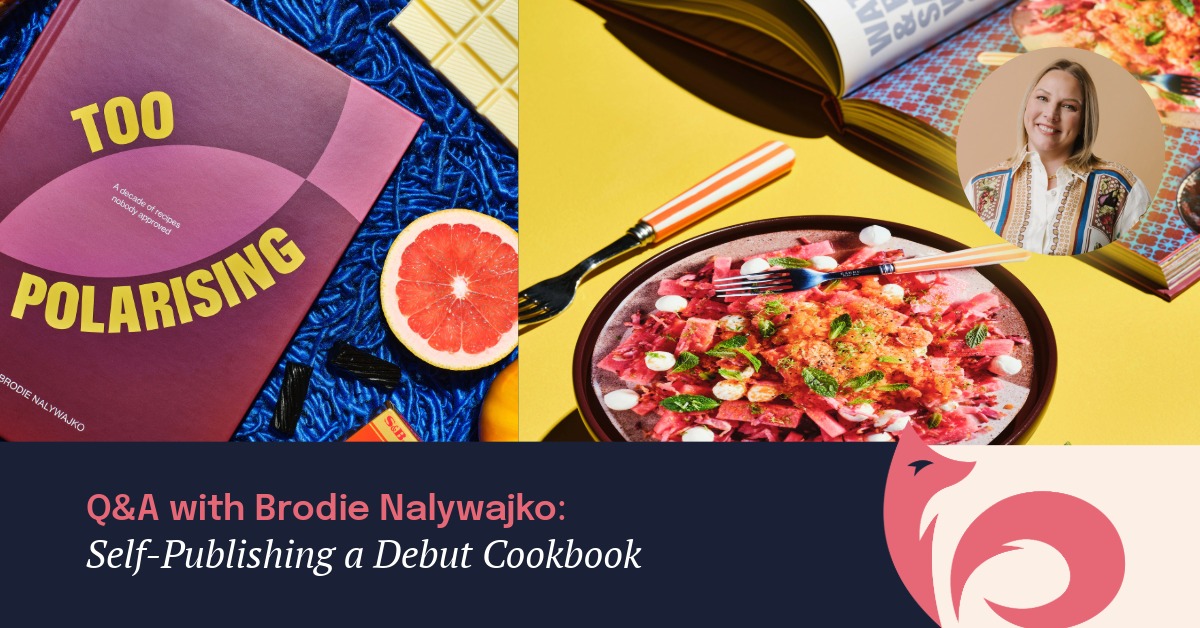
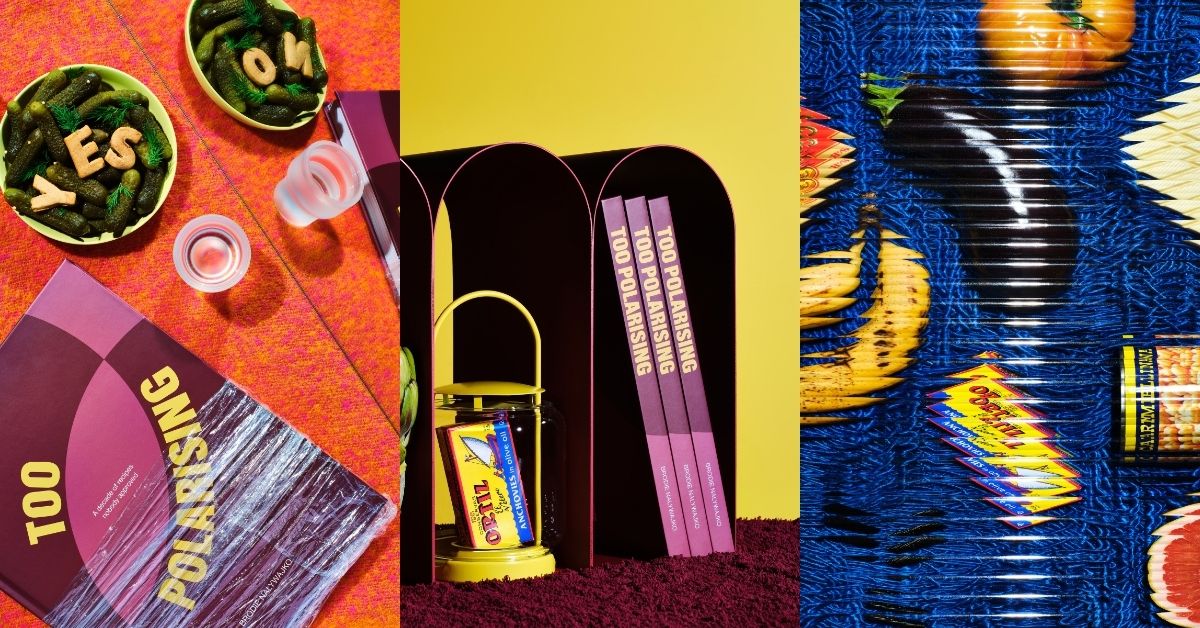
If the name Brodie Nalywajko looks familiar, you might recognise it from the incredible creative studio Pierogi Studio or well-known award-winning food blog The Hungry Babushka. Now, get ready to see it splashed across the front of your new favourite cookbook. Brodie’s debut cookbook Too Polarising is the author’s newest foodie adventure, exploring the power of food to provoke, connect and surprise. Beautifully designed and photographed, and full of captivating recipes to try, it was our pleasure to work with Brodie at FolioFox to bring her parcel of hardcover-bound printed food stories to life.
Below, we chat to Brodie about what it was like to write, photograph, design and print her first cookbook, as well as the thinking behind her design decisions when sending the book to print.
Meet Brodie Nalywajko, the brains behind Too Polarising
Hi Brodie! Tell us a little bit about you and what inspired your new cookbook, Too Polarising.
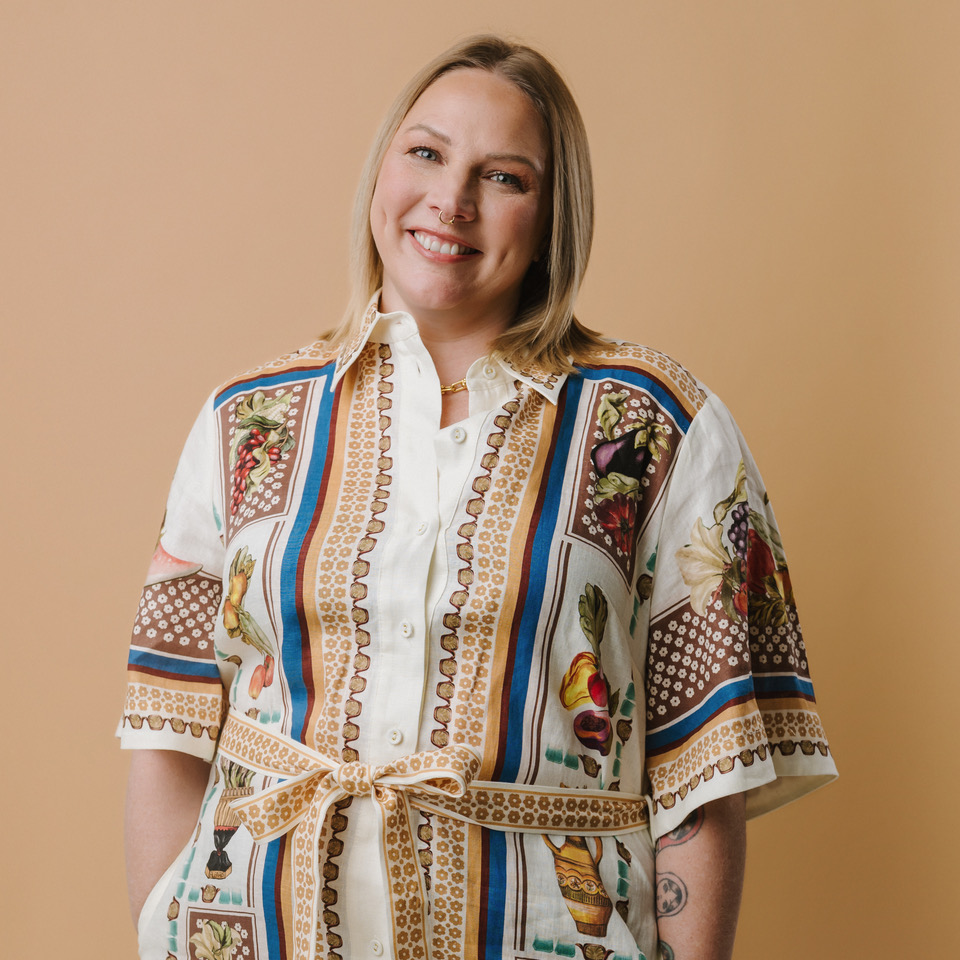
I’m Brodie! A food director and creative who loves making food feel fun, surprising and a little unexpected. Too Polarising grew out of my fascination with foods that provoke an immediate reaction. Everyone has an ingredient they absolutely love and someone else can’t stand, and I wanted to play with that idea.
The book isn’t really about persuading anyone to change their mind. It’s a celebration of strong tastes, personal preferences and the conversations that happen around food, with plenty of bold, playful recipes along the way.
How did you get into the food corner of photography and writing?
It started with a food blog about 15 years ago, where I taught myself to photograph food and write recipes. Mainly because apparently I needed a hobby that generated a lot of washing up. Somehow, that gradually turned into a career, and now I develop, write and photograph recipes for international food brands. So the scale has changed, but the washing up hasn’t.
What was the catalyst for writing Too Polarising?
It’s a bit cliche, but it was an existential crisis after a trip to India. I came home questioning what I was doing creatively and decided I needed to make something entirely my own. Too Polarising grew from that: a project where I could follow my instincts, explore ideas that might not survive a commercial brief, and make the kind of food and imagery I genuinely wanted to put into the world.
How has your food blog, The Hungry Babushka, informed the making of Too Polarising?
The Hungry Babushka was where I learned everything - recipe writing, food photography and how to trust my own slightly questionable ideas. As I began working with commercial brands, those quirks were gradually pushed down to fit the brief. After a while, I couldn’t push them down any further. Too Polarising became the place to let them all back out.
What skills or lessons have you learnt from maintaining a social media platform that have been helpful in creating, designing and publishing a cookbook?
To make things without waiting for permission, which was important when it came to creating and publishing the book. But I’m not sure it was entirely helpful. Socials can make you place too much value on immediate validation: likes, comments and whether something performs, which isn’t necessarily the best environment for making interesting work. With Too Polarising, I had to unlearn some of that and force myself beyond the discomfort that not everyone will like it.
What enticed you about making a cookbook?
I make recipes for brands for a living, and I wanted to create something entirely from my own thinking, without restraint, approval or a brief. In an increasingly digital world, it had to be a physical book. I deeply value someone carving out a small amount of time to be absorbed in a book, without competing with browsers, apps and whatever else their phone would rather they were looking at.
What’s your favourite thing about cooking?
I love that cooking demands you to be present. You can’t completely disappear into your thoughts when something is about to burn.
Food is a blank canvas for creativity: it can be beautiful, strange, nostalgic or funny. But creativity in cooking still requires knowledge - understanding ingredients, technique and how flavours work together. I like that balance. There’s plenty of room to experiment, but still enough structure to stop the whole thing from tasting like garbage.
What is something that you’ve learnt from running Pierogi Studio that was paramount in bringing the cookbook together?
Running Pierogi Studio taught me to think beyond an individual recipe or photograph and consider the whole world around an idea. That was essential with Too Polarising, because the recipes, photography, styling and design all needed to feel like parts of the same slightly strange universe.
Take us behind the scenes of the process of creating the cookbook.
Many of the ideas began as concepts I’d pitched to brands that weren’t approved. I still believed in them, so the book became a place to show them a bit of love.
I shot it one day a week over six months, which is not a conventional way to make a cookbook. Usually, a team of four or five might shoot around ten recipes a day over eight to ten days. I developed the recipes, styled the food and photographed everything myself, so a slower pace was necessary, and probably better for my sanity.
I worked with the incredible designer Luke Pringipas, who I’d previously collaborated with on a smaller project for Just Food Collective. He brought his own vision while really understanding the world of the book.
We broke plenty of design rules, asked our designer friends for their opinions, then completely ignored their advice and did what felt right for the project.
It was also important to me to print locally. As this was my first cookbook (and photography is my actual job) I wanted to proof everything accurately and make sure the colours translated properly in print.
The team at FolioFox were incredibly responsive, patient and understanding throughout the entire process, I really can’t thank them enough!
What kinds of things did you have to think about when designing Too Polarising?
We had to think about how to make the book feel as bold and opinionated as the recipes without becoming visually exhausting or completely unusable. The photography, typography, colour and pacing all needed to belong to the same world, while still giving each recipe its own moment.
We also thought a lot about the book as a physical object: how it feels to move through it, where the quieter moments sit and how accurately the colours would reproduce in print. We broke plenty of design rules, but we wanted every strange decision to feel intentional, not like we simply didn’t know the rules.
Why did you opt for a hardcover design?
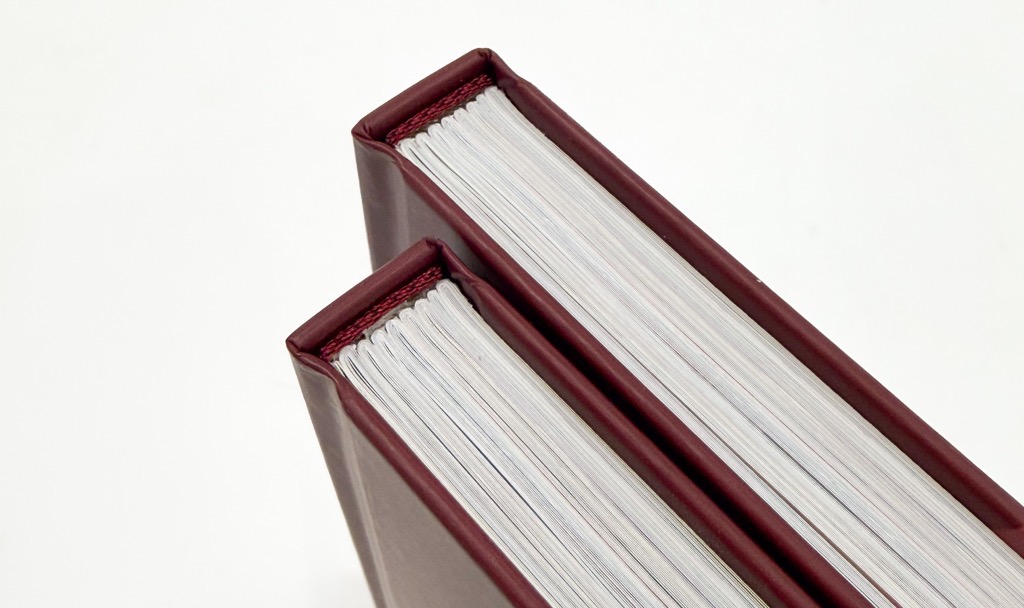
I wanted it to feel like an object people would keep, display and return to. The photography and design are as important as the recipes, so a hardcover gave the book the weight and permanence the work deserved. It also makes it feel slightly more authoritative, which is useful when you’re asking people to trust some fairly questionable ideas.
Did you always envision a hardcover without a dust jacket? What was behind the finishes you chose for the book?
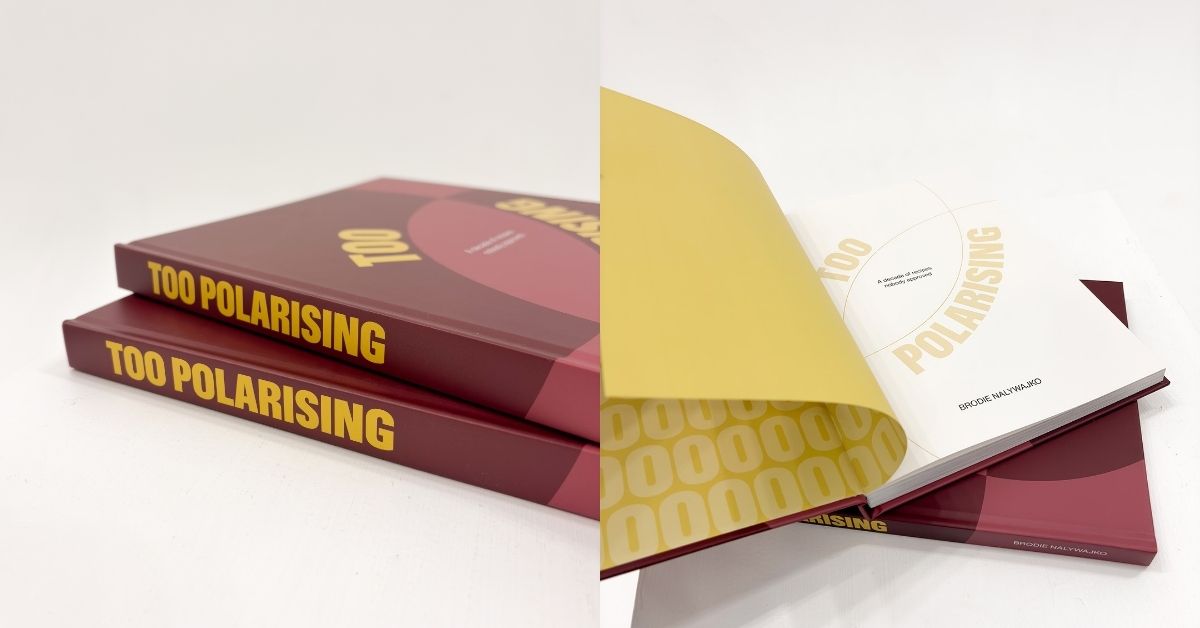
We decided quite quickly that there wouldn’t be a photograph on the cover. We weren’t designing backwards from what we thought would be easiest to sell, which gave us the freedom to ignore some of the usual rules of cookbook design. We wanted it to feel like a little easter egg in a bookshop - something you discover for yourself and feel oddly pleased to have found.
More like a small treasure, less like a cookbook with a giant photo of my beaming face eating a salad.
The Venn diagram on the cover became a recurring device throughout the book, tying the design back to polarising tastes and overlapping opinions. We used spot UV on the title to add a tactile element that reveals itself as the book catches the light. The hardcover without a dust jacket kept the design direct and integrated, with nothing covering it up or waiting to be torn and thrown away.
What was the most surprising thing you learnt about making a cookbook?
The most surprising thing was that I didn’t want it to end. I thought I’d feel relieved when it was finished, but I found it incredibly difficult to know when to stop. The ideas kept coming, right up until I had to send the final files which, it turns out, is the only reliable way to finish a cookbook.
What do you hope that readers will take away from Too Polarising?
I hope readers come away feeling that food doesn’t have to please everyone to be worth making. It can be funny, specific, slightly uncomfortable or just a bit weird. I’d love for people to take a small risk, stay curious and trust their own response, even if that response is to make one recipe and never forgive me for it.
Did you ever think you’d end up publishing a cookbook? How does it feel now?
I’m addicted to buying everyone else’s cookbooks, so I suppose it was inevitable! Now that it exists, it feels exciting and slightly addictive. I can already understand why people make more than one.
How has your relationship with your writing changed since publishing a cookbook?
I used to overthink my writing, but publishing the book has made me feel much more uninhibited about putting my thoughts out there. Once you’ve committed them to print and can’t edit, delete or quietly pretend they never happened, everything else feels a little easier.
Grab a copy of Too Polarising, Out Now
Thank you so much for chatting with us, Brodie!
It’s been so lovely to hear about your journey with creative exploration through food and how this cookbook is truly a celebration of connection. We can’t wait for more readers to discover Too Polarising and your cooking adventures.
If you want to get your hands on a copy of Too Polarising (and trust us, you do!), you can purchase a copy here to get cooking.
We're proud to support independent Australian authors bringing their stories to print. If you have a book you're ready to publish, get in touch and we'd love to be part of your journey.
Print Specifications:
Internal/Text Pages: 150gsm Silk HD
Cover: 170gsm Standard Silk/Satin + Matt Lamination & Spot UV (PLC)
Endpapers: 140gsm Standard Uncoated (Printed)
Finish Size: 210mm x 280mm
Binding: Hardcover Binding, Section-Sewn
Digital Printing by FolioFox, printed & bound in Melbourne, Australia.